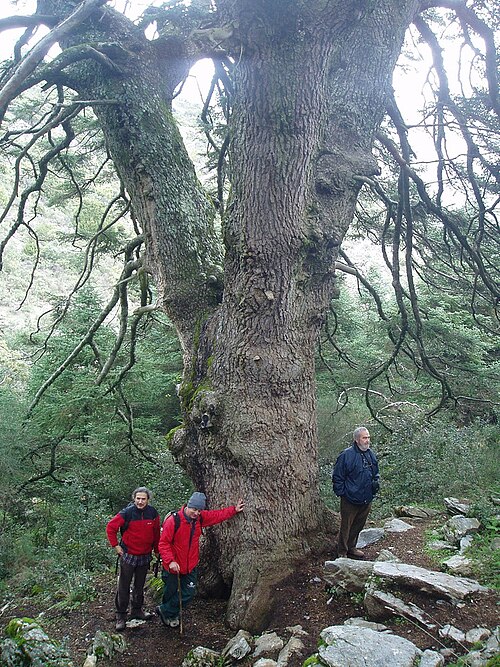
This is the one tree on this page whose age comes with its arithmetic attached. The register's sheet does not simply assert a number: it says that dendrological work on yews puts a five-metre girth at somewhere between 500 and 600 years, notes that this tree measures 4.50 metres and grows in conditions poor enough to slow it further, and concludes that it may go back five centuries. That is an estimate with a method, which is rarer than it should be. The yew is 19 metres tall, on a broken northeast-facing slope so steep and so thin-soiled that almost no shrub layer grows, which is ideal ground for the Spanish ibex and hard on everything else. It is hidden among pinsapos and bare rock and takes finding. On a clear day you can see the Sierra Nevada from where it stands, 150 kilometres east. Yew is the slowest thing on this mountain and it gets slower with age, which is the whole reason the arithmetic works.
In fruit
August to October: red arils on female trees, the only part that is not poisonous
The line is our estimate of how much there is to see, not a measurement. Typical for this species where this tree stands; exact weeks shift with the year.
Froncaile, Tolox 29109, Malaga, in the Sierra de las NievesYou can recognise it by being hidden among firs on bare, steep, thin-soiled ground with almost no shrub layer around it. It stands at Froncaile, Sierra de las Nieves.
Free, public land inside the Sierra de las Nieves; steep ground, and the tree is hidden among firs
Tolox, about 40 km east of Ronda, then a walk into the Froncaile area
Sources
Where the facts on this page come from.