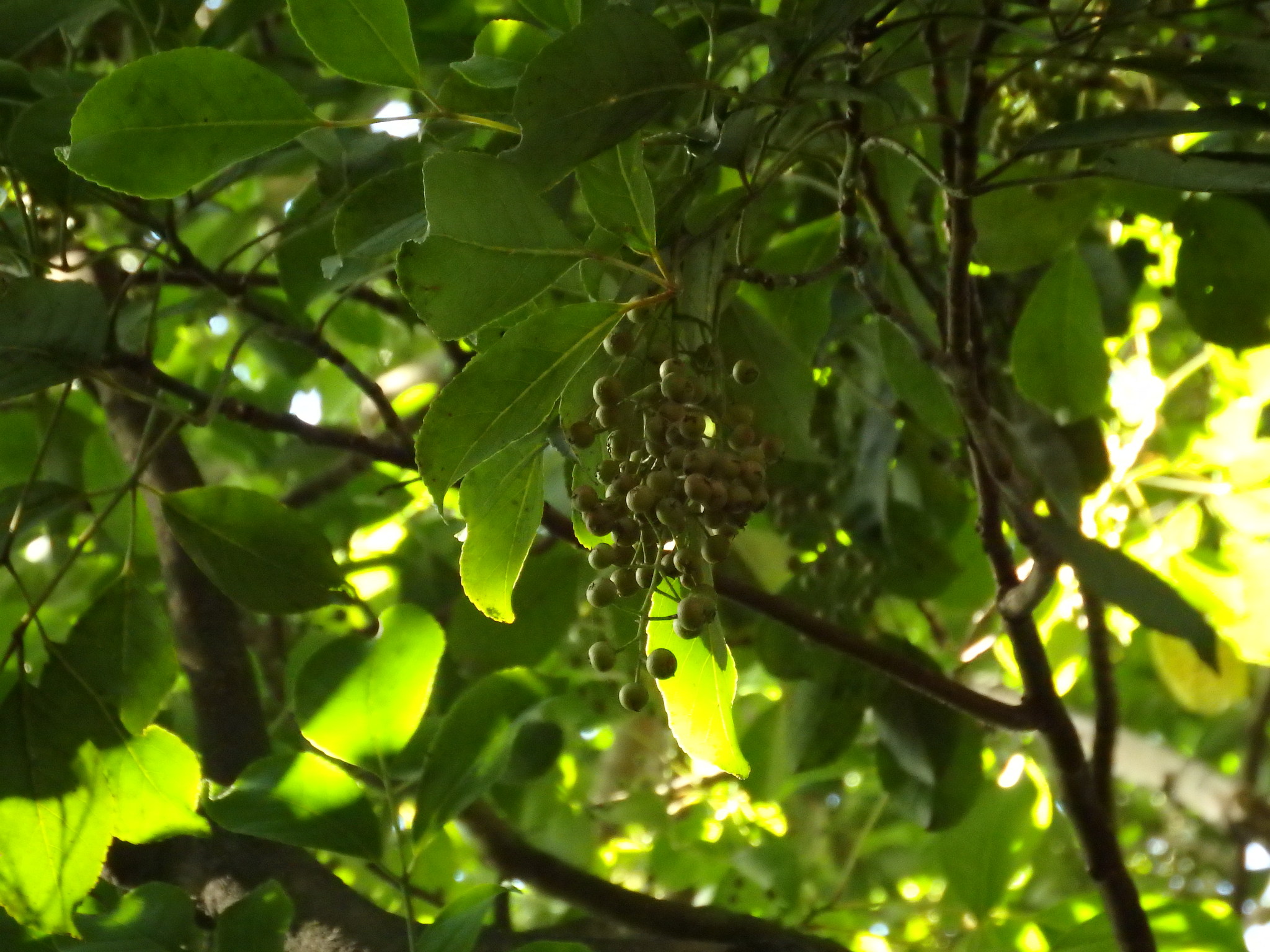
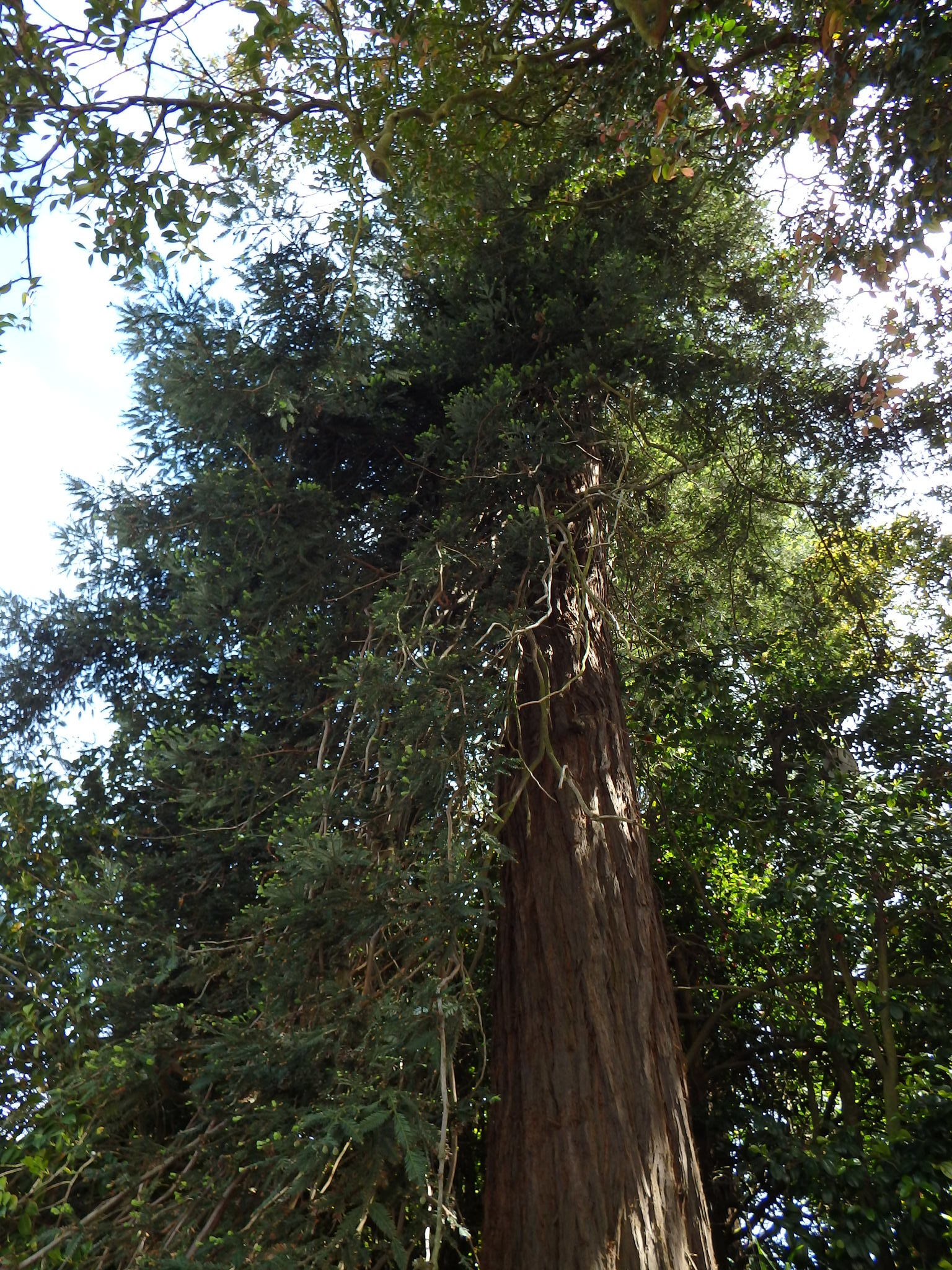
Two of these stand eleven metres apart on the grass at Passeio Alegre, and neither is much taller than a house. Seven metres of height, trunks 3.15 and 2.62 metres round, crowns averaging nearly 13 metres. They are wider than they are tall, and that shape is the whole point. Metrosideros excelsa grows on sea cliffs at home in New Zealand, anchored in rock and salt wind, and the mouth of the Douro is the closest thing Porto has to that. Aerial roots hang off the older limbs. The bark is grey and fibrous. Nothing about the tree says ornamental until late spring, when the crowns go red with stamens rather than petals, thousands at once. The two were classified together in 2005 as isolated specimens, which is exactly how they stand: out on the open lawn rather than in the promenade's tree lines. The register recorded both at 70 years when it measured in 2004, so roughly 90 now, and the city's own environment service puts them at over 80, which agrees. Passeio Alegre is the long formal garden at the Foz end of the waterfront, laid out in the 19th century as the place Porto came to walk on a Sunday. It is still doing that job, and these two have watched every version of it.
In bloom
late spring, when both crowns turn red with stamens above the river mouth
Jardim do Passeio Alegre, Rua do Passeio Alegre, PortoYou can recognise them by their aerial roots and grey, fibrous bark, wider than they are tall at just seven metres high. They stand together on the grass at Passeio Alegre.
Free, public riverside garden in Foz do Douro
Foz do Douro, near the Douro river mouth; served by tram line 1 and STCP buses along Rua do Passeio Alegre
Sources
Where the facts on this page come from.
- In the official register: ICNF, Arvoredo de Interesse Publico
- ICNF, Arvoredo de Interesse Publico (Portugal's national register of trees of public interest) (processos KNJ1/448 and KNJ1/449, classified D.R. n.…
- ambiente.cm-porto.pt
- dias-com-arvores.blogspot.com