Seasons1 of 4
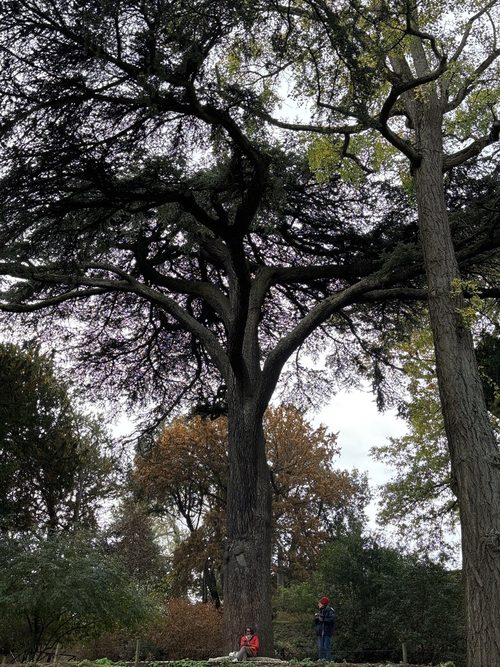
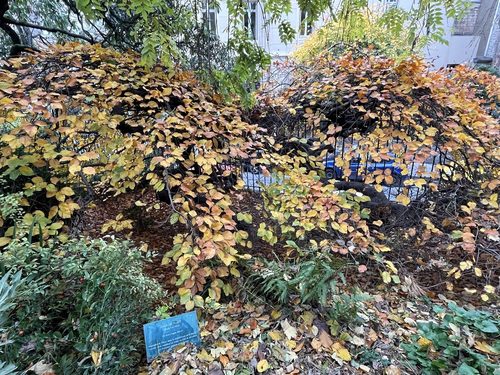
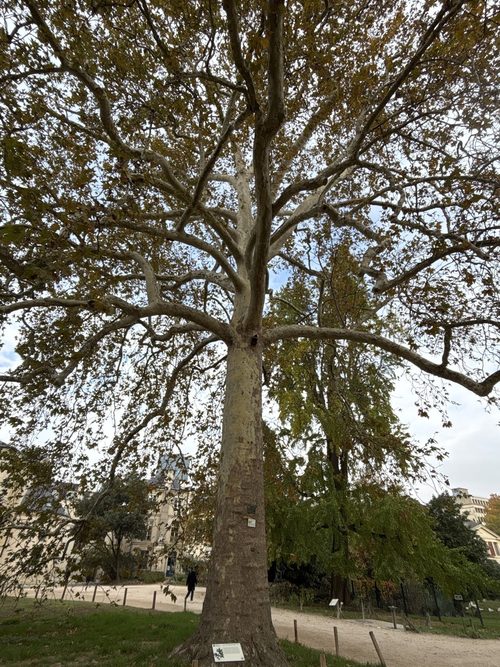
A reader sent us this bur oak from just inside the railings of the Jardin des Plantes, by a gate opposite the Pharmacie Cuvier, and gave it 215 years. Bur oak, Quercus macrocarpa, is a tree of the North American prairies and river valleys, named for the shaggy, fringed cups of its acorns, among the largest of any oak on that continent. Here it stands in the old royal garden of medicinal plants that became the national natural history museum, a long way from home. The reader photographed it in November, bare, which is when its shape shows best. A single dark, straight trunk rises past the garden wall before breaking into a wide fan of heavy limbs that reach out over the shrubs and across the gate towards the street. A small label stands in the fallen leaves at its foot, behind a low hooped railing, and the tall stone apartment buildings of the Latin Quarter fill the view behind it. We do not know its girth or the garden's record of its planting. If you can read the label, or know its history, tell us here and we will add it. Come back in summer for the big lobed leaves, and in autumn look on the path for acorns in their fringed cups.
From people who stood here
No notes yet
Did you visit the tree? Leave a note for the next visitor.
Getting there
Jardin des Plantes, inside the railings by the gate opposite the Pharmacie Cuvier, Rue Cuvier, 75005 Paris
Just inside the garden railings by a gate opposite the Pharmacie Cuvier: a tall oak on a single straight dark trunk, a small label at its foot behind a low hooped railing, its wide crown reaching out over the gate.
Free, in the Jardin des Plantes, open daily; it stands just inside the railings by the gate.
The line is our estimate of how much there is to see, not a measurement. Typical for this species where this tree stands; exact weeks shift with the year.