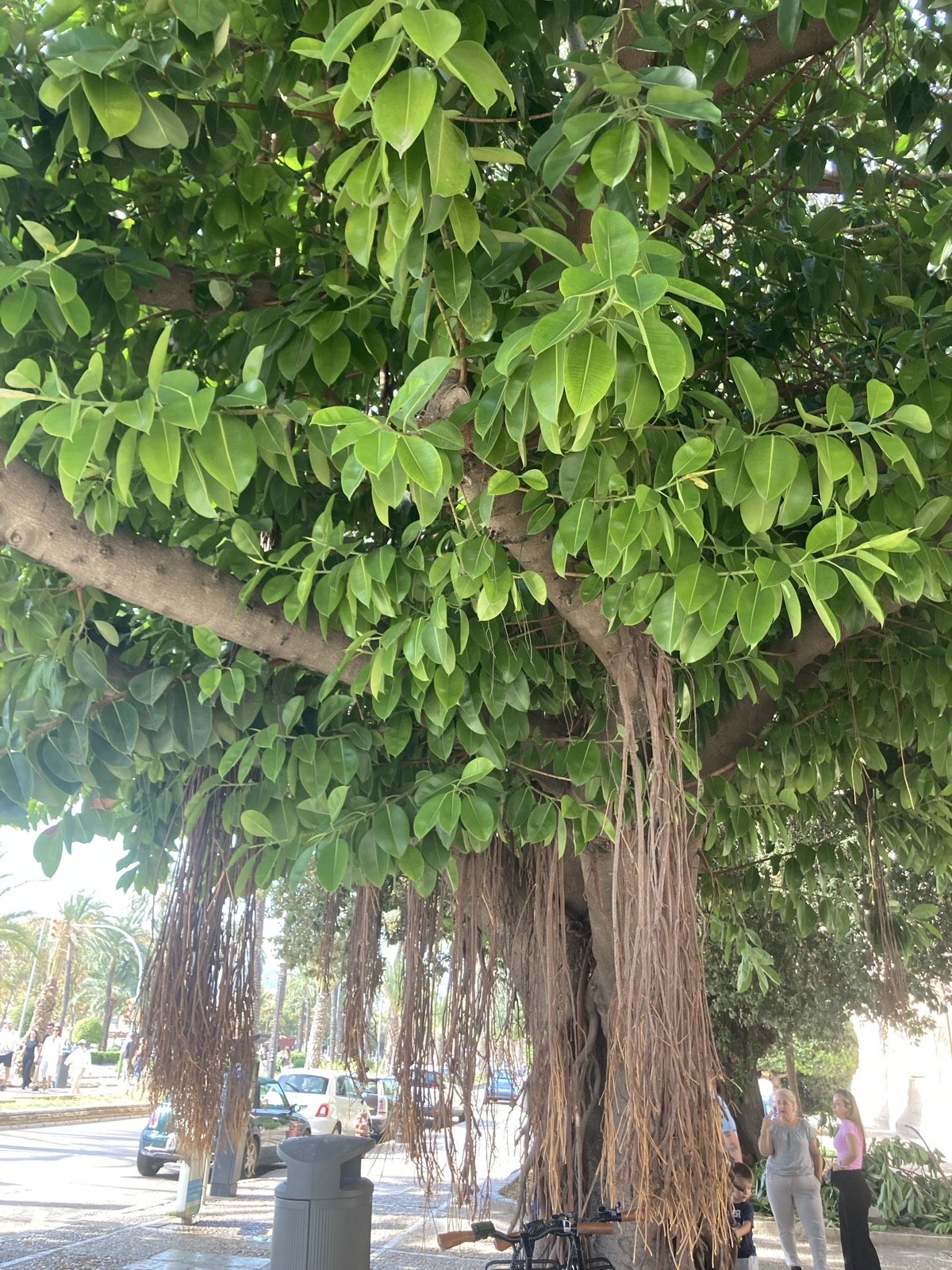
The Lagunària de la Llotja
SpainPalma de MallorcaOld town seafront, Palma
Locals call it pica-pica, and the name is a warning rather than an insult. Lagunaria patersonii comes from a single small island in the Tasman Sea, Norfolk Island, and packs its seed pods with fine glass-like hairs that itch for hours if the pod is opened carelessly. English speakers call the species the itchy bomb tree for the same reason. In summer it flowers in pale pink cups that pass for a small hibiscus, which is where the polite half of its name comes from. This specimen grows on the Passeig de Sagrera, the seafront promenade, directly in front of La Llotja, the fifteenth century Gothic merchants' exchange that is one of Palma's best known medieval buildings. At 2.6 metres round and 18 metres tall it is a substantial specimen of a species usually kept smaller as a street or garden tree, catalogued by the Balearic government among the island's singular trees for exactly that reason. It is the most street level and sociable entry on this page: no garden wall, no ticket, just a big tree doing its work of shade and ornament on a promenade full of people, across from a building that has been central to Mallorcan trade since before Columbus sailed.
The line is our estimate of how much there is to see, not a measurement. Typical for this species where this tree stands; exact weeks shift with the year.
Passeig de Sagrera, in front of La Llotja, PalmaThe large pyramid-shaped evergreen directly on the seafront promenade in front of La Llotja's Gothic facade, unmistakable for its dense shape and, in summer, small pink flowers.
Free, on the open public seafront promenade, no gate or opening hours
In the old town, about a 12 minute walk from Plaça d'Espanya (Metro de Mallorca and the main EMT bus hub)
Sources
Where the facts on this page come from.