The Silk-Cotton Tree of the Orto Botanico
You need a ticket to see this treePaid entry (Orto Botanico di Palermo ticket).
Palermo calls this one the drunken tree, and the trunk explains it. Ceiba speciosa swells into a green bottle shape and covers itself in conical spines, which is a defence against animals that do not exist on this continent, and it stands on the botanical garden's avenue of chorisias with several others of its kind. It flowers when almost nothing else does. Big hibiscus-shaped blooms open through the autumn and into December, cream then pink then violet on the same tree, and the seed pods that follow split to release the silky floss the species is named for, once used to stuff life jackets. The garden brought the species from Brazil around 1896, and the botanist Michele Lojacono Pojero recorded the first one growing in a Palermo garden in 1910. Neither date belongs to this particular tree, and no source gives it one, so its age is left open rather than borrowed from the species' arrival. Its trunk measures 3.8 metres round. The Orto Botanico charges entry, which buys you one of the great nineteenth-century acclimatisation gardens of the Mediterranean, and this is among the odder things growing in it.
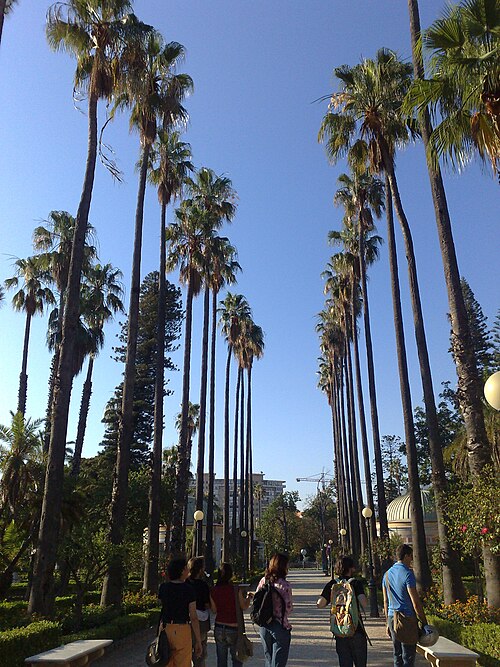
Orto Botanico di Palermo, Via Lincoln 2/A, PalermoUnmistakable: a swollen green bottle of a trunk covered in conical spines, on the avenue of chorisias.
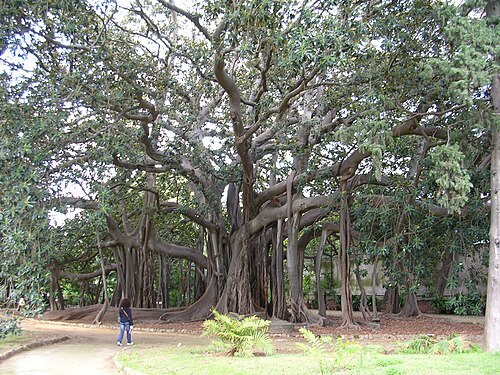
Same garden as the already-published Ficus of the Orto Botanico, a few hundred metres away
Sources
Where the facts on this page come from.
- In the official register: Elenco degli alberi monumentali d'Italia (MASAF), no. 34/G273/PA/19
- regione.sicilia.it
- musei.unipa.it