The Olive and Pine Grove of Colline du Château
Colline du Château
Approximate location.
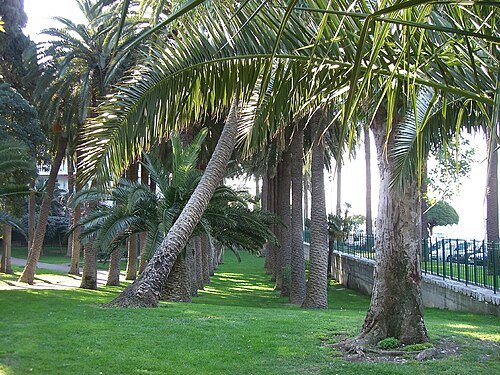
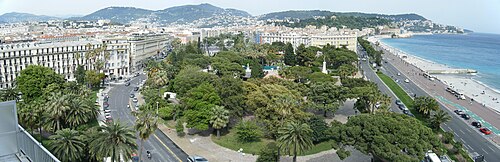
For most of Nice's history this hill was a fortress rather than a garden. A citadel stood here from the 11th century, guarding the bay, until the troops of Louis XIV demolished it in 1706 rather than let it fall back into Savoyard hands. The ruins sat mostly untouched for over a century before the city began turning the hilltop into a public park in 1822, planting stone pines, olives, carob trees, cypresses, evergreen oaks, hackberries and mastic trees across what is now a 19.3 hectare Mediterranean garden with more than three kilometres of paths. Centuries-old olive trees are among the oldest individual specimens now growing there, alongside stands of Aleppo pine, though no source gives any single tree in the park a documented age, so any figure is an estimate from the park's own founding date rather than a measured record. The climb rewards itself regardless of the trees: the summit is the highest point in central Nice, with the bay, the old town and the Paillon valley all visible from the same viewpoint the citadel's own defenders once used.
From people who stood here
No notes yet
Did you visit the tree? Leave a note for the next visitor.
Getting there
Parc de la Colline du Château, 06300 Nice
You are looking for a hillside rather than one tree: old olives among stone pines, carobs, cypresses and mastic on the castle hill, planted from 1822 over the ruins of the citadel.
Free, open daily. The city of Nice publishes hours of 08:30 to 20:00 from 1 April to 31 October and 08:30 to 18:00 from 1 November to 31 March.
10 min walk (or free lift) from Old Nice / Place Garibaldi
Sources
Where the facts on this page come from. The story was written with AI from these sources, and readers who know the tree correct it.