The Monterey Cypress of Parque do Caramão da Ajuda
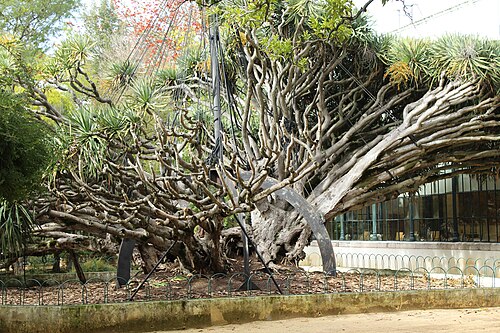
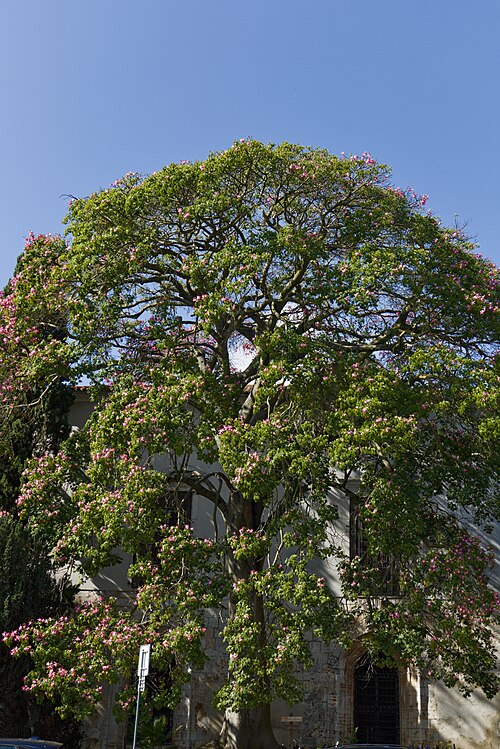
Monterey cypress has one of the smallest natural ranges of any conifer: two headlands on the California coast near Monterey, a few kilometres of cliff, and nothing else in the wild. It also grows happily almost anywhere mild and coastal, which is how one ended up roughly 9,000 kilometres away with a 3.9 metre trunk in a park above Belém. At 18.5 metres tall with a 17 metre crown, this is a heavy, wide, dark tree, the shape Monterey cypresses take once the wind has had a few decades at them: horizontal limbs, flattened top, foliage in dense sprays that smell of lemon when crushed. It stands in the Parque do Caramão da Ajuda, which is a public park and not the Tapada da Ajuda next door. That distinction is worth getting right before setting out, because the two are neighbours and only one of them has this tree. Beyond the state register, nobody appears to have written it up. The register classified it in 2000 and recorded 85 years when it was measured in 2015, which puts it around 95 now, and those are the only figures anyone has published. It is a solid enough record as far as it goes, and it is the whole of what is known about this cypress.
Parque do Caramao da Ajuda, Belem, 1300 LisboaYou can recognise it by its flattened, wind-shaped top and horizontal limbs, foliage that smells of lemon when crushed. It stands in Parque do Caramao da Ajuda, not the neighbouring Tapada.
Free, public park
In Belem/Ajuda, reachable by bus along Calcada da Ajuda; no metro station nearby
Sources
Where the facts on this page come from.
- In the official register: Arvoredo de Interesse Público (ICNF), no. KNJ1/375
- ICNF, Arvoredo de Interesse Publico (CC BY 4.0), processo KNJ1/375