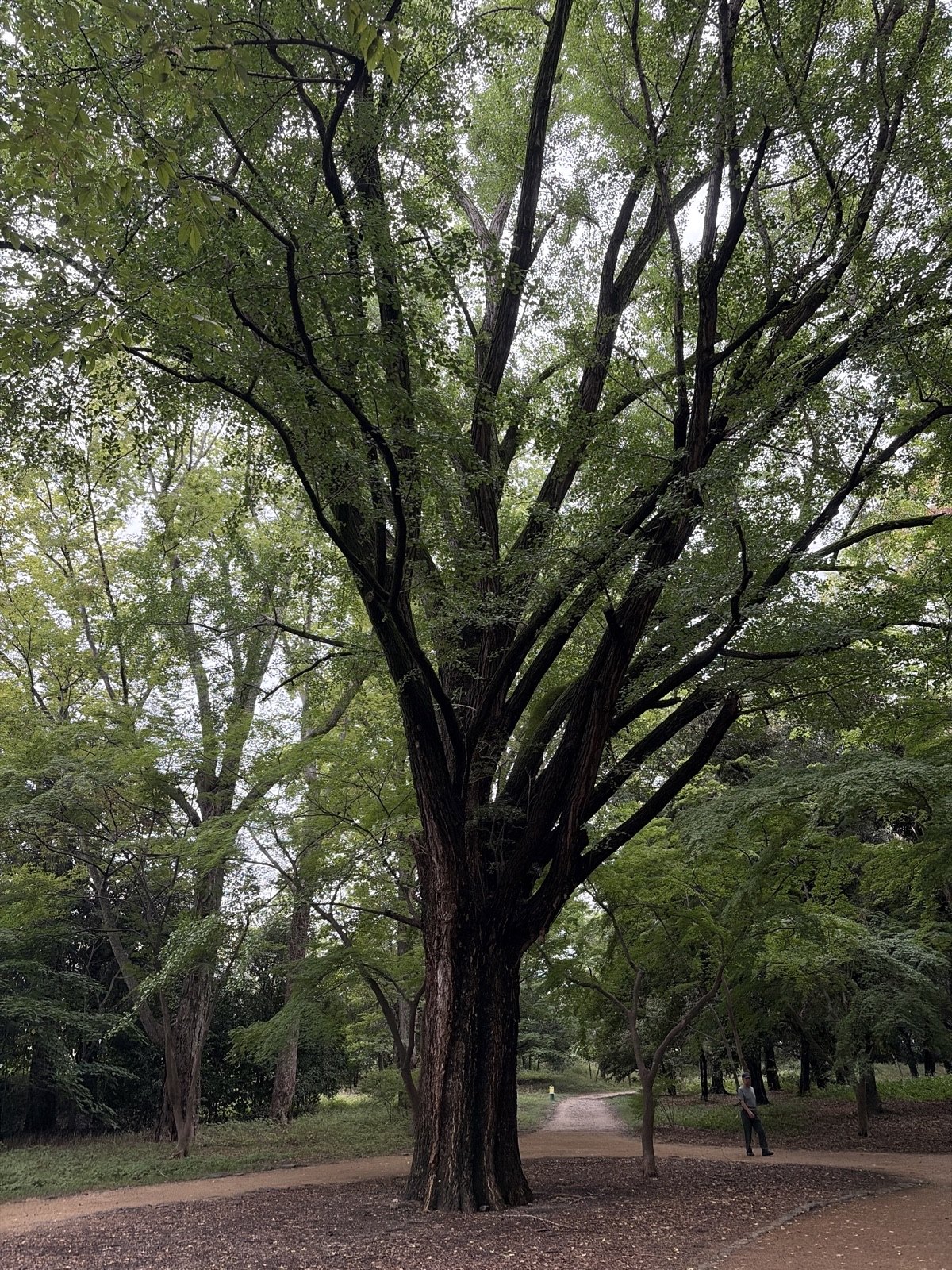
The Carriage-Turning Cherry of Kyoto Gyoen
Approximate location.
The tree that stopped an emperor's carriage is not the tree standing here now. Kurumagaeshi-zakura means the carriage turned back, and the name comes from a tradition that Emperor Go-Mizunoo, who reigned from 1611 to 1629, had already passed this cherry when he ordered his carriage brought round for a second look. That is a story told about the tree rather than anything recorded in his reign, and it is worth saying which of the two it is. The cherry standing southwest of Seisho-mon gate today is not that tree either. The original went, and after the war the Kyoto nurseryman Sano Toujiro raised its replacement from shoots cut off it, so what grows here is roughly eighty years old and genetically the same cherry, in the same place, on its second run. Go in April and the reason to stop has nothing to do with emperors. Single and double flowers open together on the same crown, the flat five petals of a wild cherry beside the crowded rosettes of a cultivated one, all on one tree. Kyoto Gyoen has been public ground since 1877, eight years after the court followed the emperor to Tokyo, and this corner of it puts the cherry within a kilometre of the hackberry at Demizu-guchi and the camphor at Munakata Shrine. It carries both single and double flowers on one trunk, which is why nobody has pinned its species down past the genus. If you know which cherry it is, tell us.
In bloom
early April, when single and double blossom open together on one crown
You can recognise it in April by the flowers, single five-petalled ones and crowded double rosettes opening together on the same crown. It stands southwest of Seisho-mon gate.
Free. Kyoto Gyoen National Garden is open to the public year-round, dawn to dusk.
Marutamachi Station (Kyoto Municipal Subway Karasuma Line), roughly 15 minute walk
Sources
Where the facts on this page come from.