The Yews of Chalice Well
Approximate location.
You need a ticket to see this treePaid entry to Chalice Well Gardens (run by the Chalice Well Trust, open to visitors; current hours and prices on chalicewell.org.uk, site not fetched)
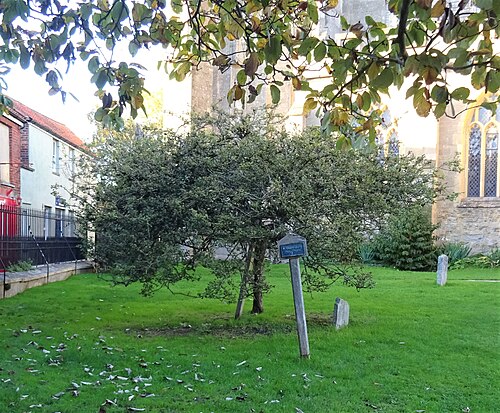
In 1961, digging beneath Chalice Well, excavators found the stump of a yew still in the ground where it had grown. Professor R.D. Preston of Leeds dated it to early Roman times, around 300 AD. The Ancient Yew Group, which records Britain's old yews, suggests it may have been an ancestor of the yews that grow beside the well today. That stump is long dead, and it says nothing about the age of the living trees. It does show that a yew grew at this spring in Roman Britain. The living yews are harder to pin down. The largest are a pair of male yews at the south end of the garden, near the Holy Thorn, which the Yew Group measured in 2006 at between eight and ten feet round. No one has published an age for them. If you know more, tell us. The garden's most photographed yew is a different tree. It splits into two stems close to the ground and joins up again at about six feet, leaving an opening between, and it goes by the name of the Yoni tree, after a female symbol, although the Yew Group points out that the tree itself is male. On the eastern edge of the garden stands another old yew whose two trunks have grown back together. Chalice Well is a garden around a spring at the foot of Chalice Hill, run by the Chalice Well Trust, with paid entry.
From people who stood here
No notes yet
Did you visit the tree? Leave a note for the next visitor.
Getting there
Chalice Well Gardens, 85-89 Chilkwell Street, Glastonbury BA6 8DD
You can recognise the pair as the largest yews in the garden, two male trees 8 to 10 feet round. They stand at the south end of Chalice Well Gardens near the Holy Thorn; the yew that splits low and rejoins is a different tree.
No railway station in Glastonbury; local bus to the High Street, then about 15 minutes' walk along Chilkwell Street
In fruit
The line is our estimate of how much there is to see, not a measurement. Typical for this species where this tree stands; exact weeks shift with the year.
Sources
Where the facts on this page come from. The story was written with AI from these sources, and readers who know the tree correct it.