Fortingall is a handful of thatched cottages in a Perthshire glen twenty minutes west of Aberfeldy, with a church, a hotel and one of the oldest living things in Britain. The yew in the churchyard was ancient long before the church went up beside it, and the village has spent two centuries protecting it: the stone wall around it dates from 1785, when visitors were cutting souvenirs off the trunk. There is one tree here worth the drive, and it is enough.
0 of 1 visited in Fortingall
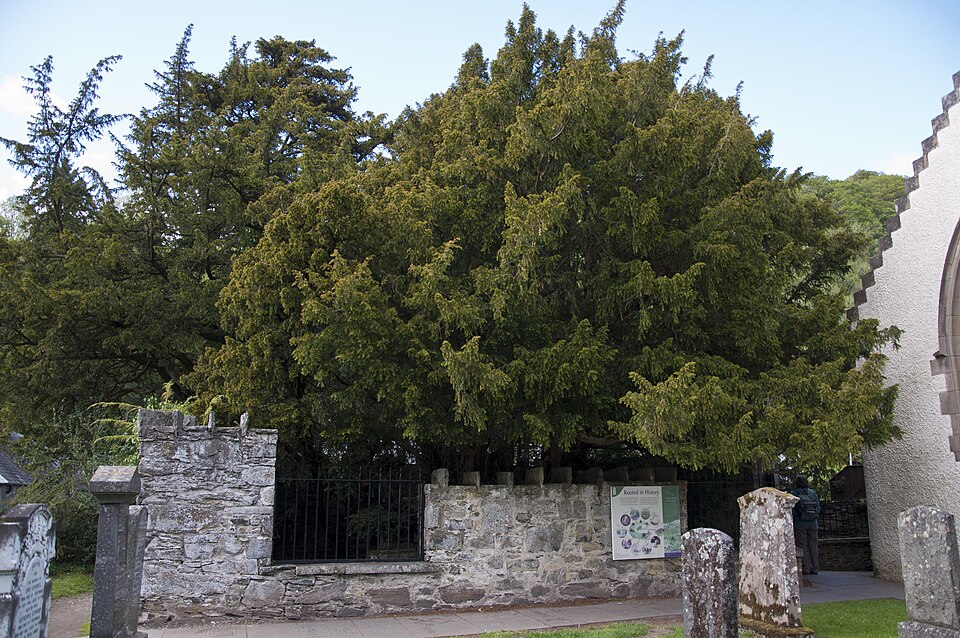
European Yew (Taxus baccata) · 2000-5000 years · Fortingall village churchyard
In 2015 a tree that had been male for as long as anyone had recorded it grew berries on a single branch. The Royal Botanic Garden Edinburgh reported the change, and beyond the novelty it was proof that the Fortingall Yew is a working organism rather than a standing relic.
Its age is genuinely disputed and always will be. Forestry and Land Scotland says 5,000 years. Bevan-Jones, the standard academic reference on ancient yews, gives 2,000 to 3,000 and allows that the tree may only date from a post-Roman Christian site here, which would make it around 1,500. Nobody can settle it, because the heartwood rotted out centuries ago and there are no rings left to count.
There was once a single trunk, and it was enormous. Daines Barrington measured it at 52 feet round in 1769, about 15.8 metres, and Thomas Pennant made it more a few years later. By 1770 the decay was already splitting it apart. What stands today reads as a small grove of separate stems, all of them one tree.
The wall around it went up in 1785 because visitors kept cutting pieces off for souvenirs, and they have not entirely stopped: the local tree warden was complaining about it in 2019. Village tradition makes this the birthplace of Pontius Pilate, which historians dismissed long ago, and which still brings people up the glen.
Photo: Paul Hermans (CC BY-SA 3.0)