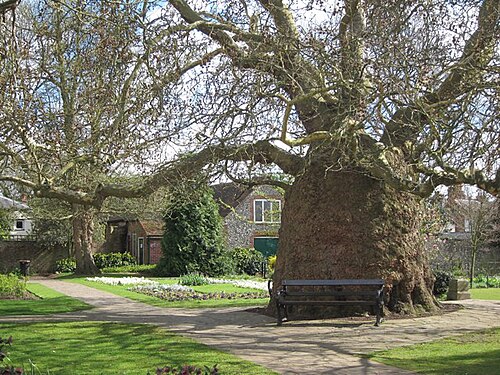
Cathedral Precincts Baobab Plane
Cathedral Quarter
Approximate location.
You need a ticket to see this treePaid entry: the precincts and cathedral are ticketed (canterbury-cathedral.org); the cathedral's grounds page places the plane just outside the Memorial Garden. Check current ticket terms.
The plaque on this plane names a date and a nurseryman, and the evidence behind it may be a website. It says the tree is an Oriental plane, supplied in the 1820s by William Masters, a Canterbury nurseryman who lived from 1796 to 1874. The Cathedral Archive credits Masters with planting it, according to KentOnline. But a member of the city's archaeological society has said the plaque's wording rests on text from the society's own website rather than on any archive record. So the 1820s date is a claim, not a fact. KentOnline puts the baobab planes at more than 150 years old and one tree blog suggests the middle of the 19th century. The species is contested too. The plaque says Oriental; the Natural History Museum's identification service, consulted in 2014, concluded that Canterbury's swollen planes are a clone of the London Plane carrying a viral infection. Whatever its name, the trunk explains the nickname, swollen and bulging like a baobab's. It stands in the cathedral precincts just outside the Memorial Garden, near the Son of Man statue, one of seven such planes scattered across the city. The precincts are ticketed, so check the cathedral's current terms before you go. It is about twelve minutes on foot from either station.
From people who stood here
No notes yet
Did you visit the tree? Leave a note for the next visitor.
Getting there
Canterbury Cathedral precincts, near the Memorial Garden and Son of Man statue, Canterbury CT1 2EH
You can recognise it by the plaque naming it an Oriental plane and by the swollen, bulging trunk. It stands just outside the Memorial Garden in the cathedral precincts, near the Son of Man statue.
About 12 minutes' walk from Canterbury East or West station.
The line is our estimate of how much there is to see, not a measurement. Typical for this species where this tree stands; exact weeks shift with the year.
Sources
Where the facts on this page come from. The story was written with AI from these sources, and readers who know the tree correct it.