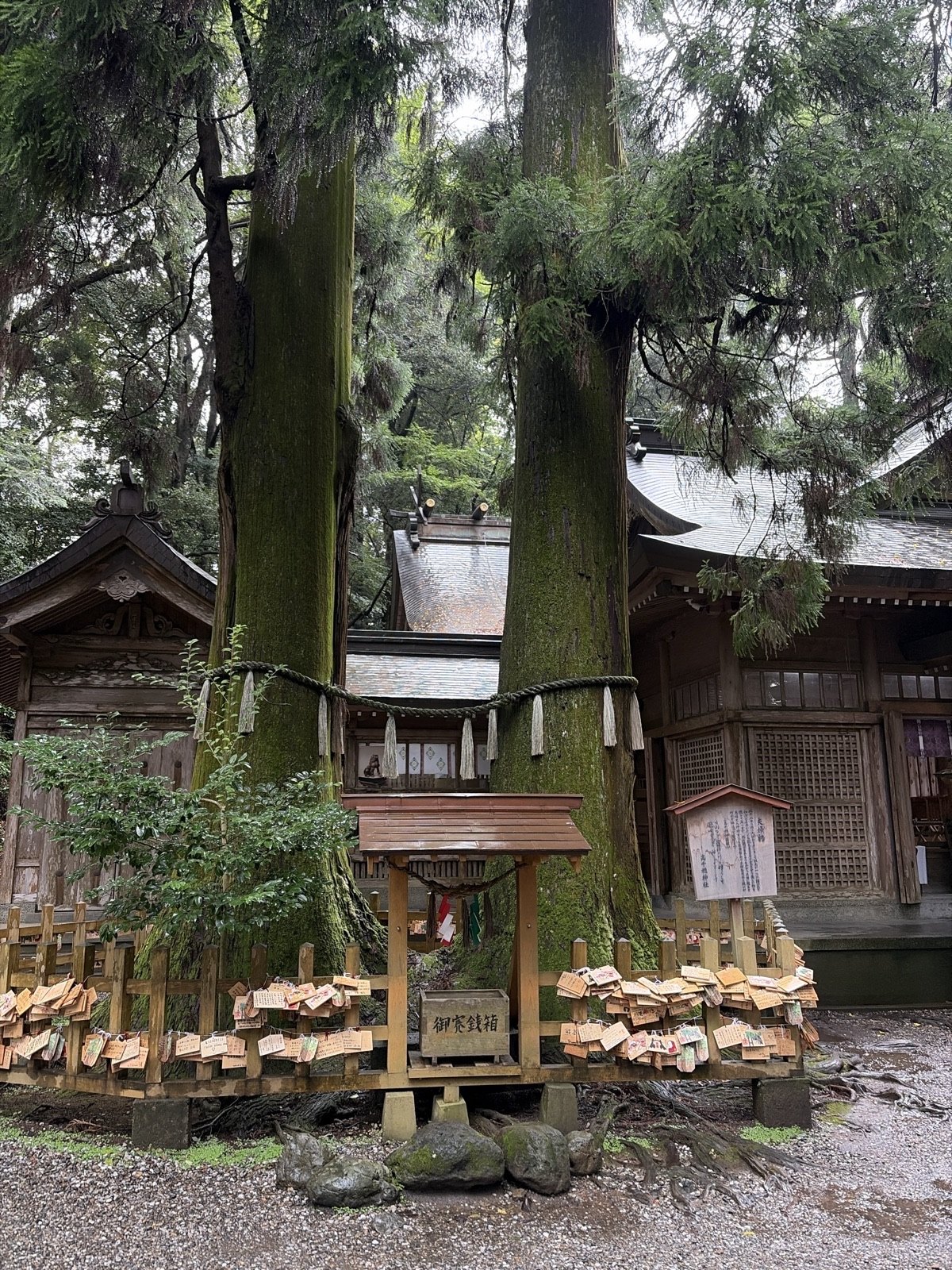
The kagura bell, by Takachiho's own account, began as a branch of this kind of tree. The story is the oldest in Japan: the sun goddess Amaterasu shut herself in a cave and the world went dark, and the goddess Ame-no-Uzume danced outside until she came out. What Uzume held as she danced, the town says, was a branch of ogatama, and the bells shaken in kagura today descend from it. The cave is across the river from the West Shrine of Amano Iwato Shrine, and this ogatama is the West Shrine's goshinboku, its sacred tree, standing inside the fence beside the shrine building. The ogatama is also Takachiho's town tree. The characters written for its name, 招霊, read roughly as calling the spirits. It is an evergreen magnolia, and this one rises as several stems from a single base, bound at the foot with a shimenawa rope beside its name board. Here the page has to be plain about what it does not know. No source we found gives its age, its girth or its height, so it is here for the myth and for the tree itself rather than for any record. If you have stood at the fence with a tape measure, or know when it was planted, tell us.
天岩戸神社 西本宮, 宮崎県西臼杵郡高千穂町岩戸1073-1 (West Shrine, Amano Iwato Shrine) You can recognise it by the several stems rising from one base, bound with a shimenawa beside a name board. It stands inside the fence next to the West Shrine building, not across the river at the cave.
Free; the shrine precinct is open 8:30 to 16:30 all year (town tourism page). The tree stands inside the fence beside the West Shrine's building, so it is viewed over the fence. Viewing the sacred cave across the river is a separate booked visit and not needed for the tree.
About 6 km east of Takachiho town centre; local bus or taxi from Takachiho Bus Centre (timetable not verified).
Sources
Where the facts on this page come from.