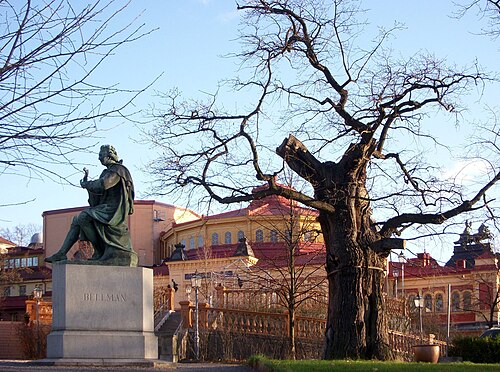
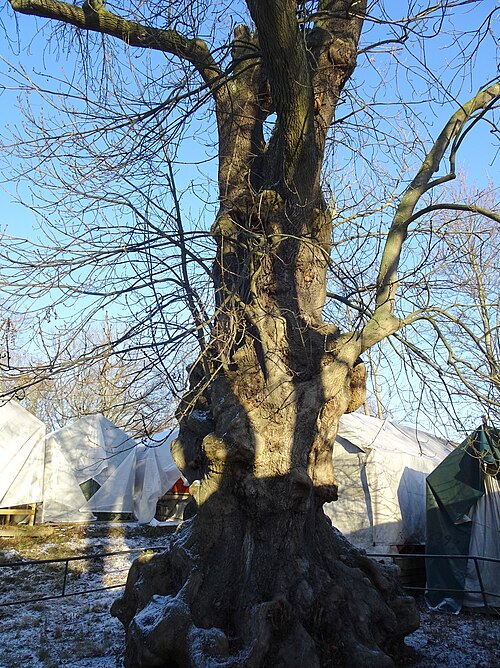
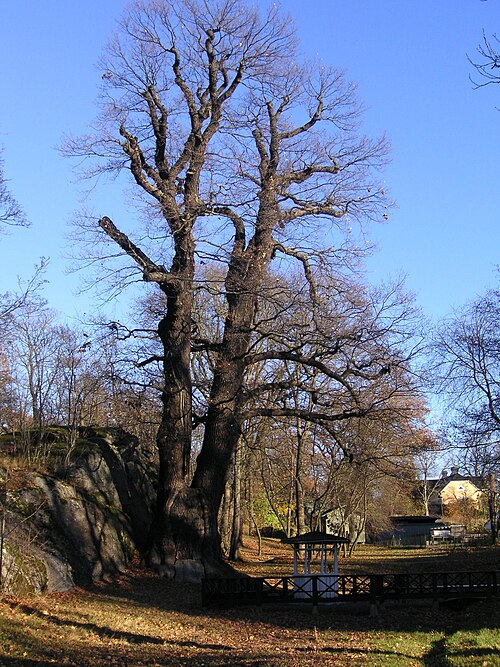
On the night of 12 May 1971, a small crowd of Stockholmers climbed into these elms and refused to come down, stopping city workers who had arrived with chainsaws to fell them for a new metro station entrance. Four of the trees took saw damage before officials called off the operation for safety reasons, and none came down that night or afterward: the plan for the metro entrance was scrapped, and the elms stayed exactly where 19th-century planters had put them, already old growth by the time Stockholm considered removing them. What Swedes call Almstriden, the Elm Conflict, became one of the country's defining environmental protests, credited with a lasting shift in Stockholm's own planning culture toward fewer demolitions, fewer new roads through old neighbourhoods, and more parks left alone. Several of the surviving elms still carry visible chainsaw scars from that night, kept rather than smoothed over. The trees now face a slower threat than any road planner: Dutch elm disease, against which the city vaccinates them every year, though the precaution did not save one elm lost to the fungus in September 2025, felled before it could infect its neighbours. The rest keep standing in one of Stockholm's most visited parks, a protest still legible in living wood.
From people who stood here
No notes yet
Did you visit the tree? Leave a note for the next visitor.
Getting there
Near the teahouse, Kungstradgarden, Stockholm
You can recognise them by the chainsaw scars several still carry from the night in 1971 when people climbed into them and would not come down. They stand near the teahouse.
Free, open access, Kungstradgarden (public square and park, open at all times)
Kungstradgarden metro station, adjacent
The line is our estimate of how much there is to see, not a measurement. Typical for this species where this tree stands; exact weeks shift with the year.
Sources
Where the facts on this page come from. The story was written with AI from these sources, and readers who know the tree correct it.