Chief Sequoyah Tree
You need a ticket to see this treePark entry fee: $35 per private vehicle (valid 1-7 days; other passes accepted; non-US residents 16+ pay an extra $100 unless on an annual or America the Beautiful pass; the park takes no cash). Beside the paved Congress Trail loop, a few steps from the President.
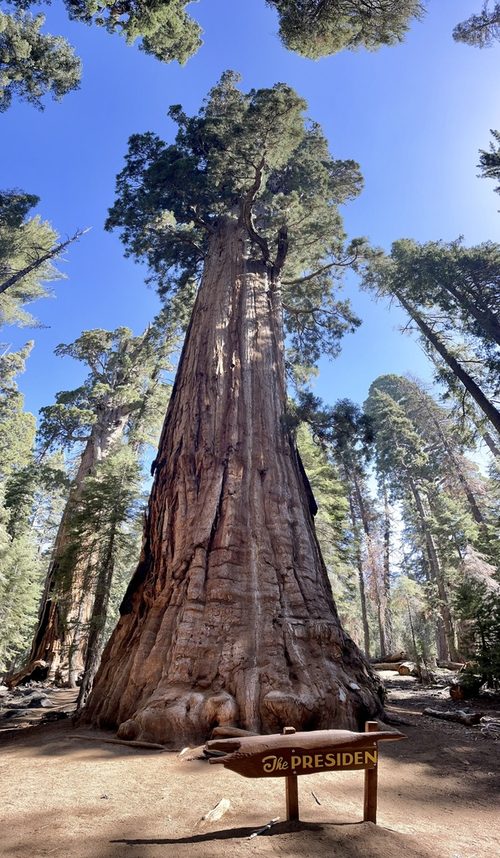
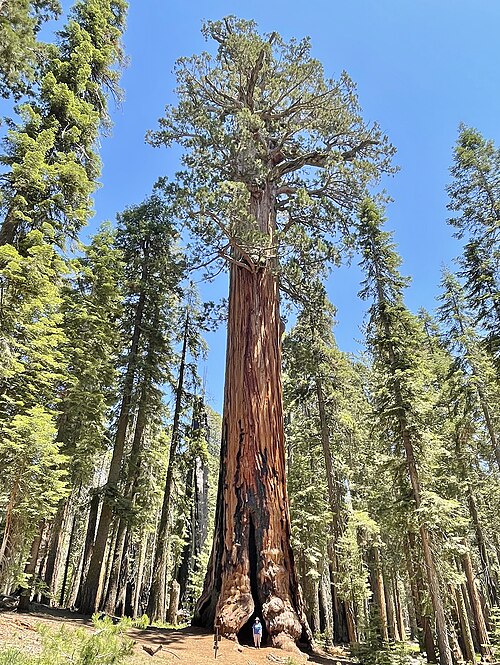
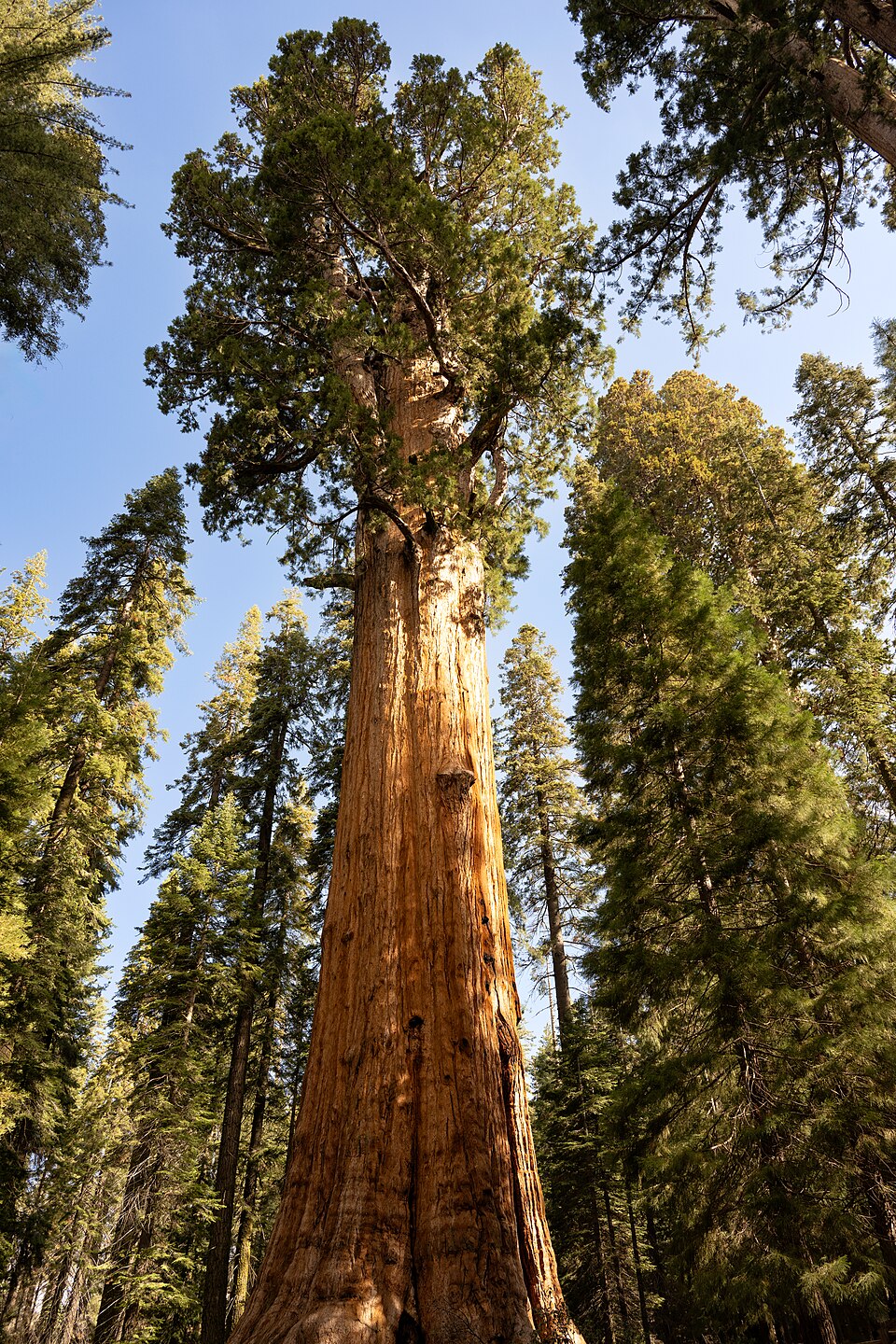
This tree is named for the man who gave the Cherokee a written language. Sequoyah finished his syllabary in 1821, and a century later one of the largest trees in the Giant Forest was given his name. Park superintendent Colonel John R. White gave it the name in the 1920s. One source says 1926 and another 1928, and neither has corrected the other, so both years stay here. The sources also disagree slightly on where it ranks: 27th largest giant sequoia in the world by one count, 30th by another, and ninth largest in the Giant Forest itself. The quarrel is about places on a list, not about scale. The trunk is roughly 27.5 metres round at the base and the tree stands close to 70 metres tall. Walk round it and two things mark it out. On the southern face is an enormous burl, a swollen knot of wood bulging from the trunk. On the western face is fire scarring, the ordinary damage of a tree that has lived through centuries of fires in this forest. It stands on the paved Congress Trail, about 140 feet uphill from the President. Nobody has published an age for it. If you know of one, tell us.
From people who stood here
No notes yet
Did you visit the tree? Leave a note for the next visitor.
Getting there
Congress Trail, Giant Forest, Sequoia National Park, Tulare County, California
You can recognise it by the enormous burl bulging from its southern face and the fire scar on its western side. It stands on the Congress Trail, about 140 feet uphill from the President.
Sources
Where the facts on this page come from. The story was written with AI from these sources, and readers who know the tree correct it.