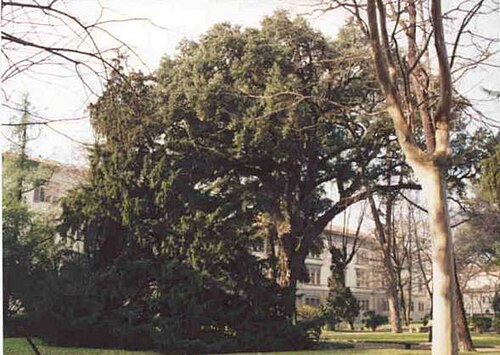
Photo: Ilaria Camprincoli (CC BY-SA 2.5)
Florence's oldest verified tree grows behind a ticket gate, in a garden older than the city's most famous museums by two centuries.
Cosimo I de' Medici founded this garden in 1545 to grow medicinal plants, which makes it the third oldest botanical garden in the world and older than most of what surrounds it.
The name means the garden of the simples, simples being the single-ingredient herbs a physician worked from before pharmacy existed. Seven of the trees we map grow inside its walls, and several are the kind of specimen a botanical garden accumulates precisely because somebody was paid to keep them alive for four hundred years.
All 7 stand in Florence, which maps 27 remarkable trees in total.
Photo: Ilaria Camprincoli (CC BY-SA 2.5)
Florence's oldest verified tree grows behind a ticket gate, in a garden older than the city's most famous museums by two centuries.
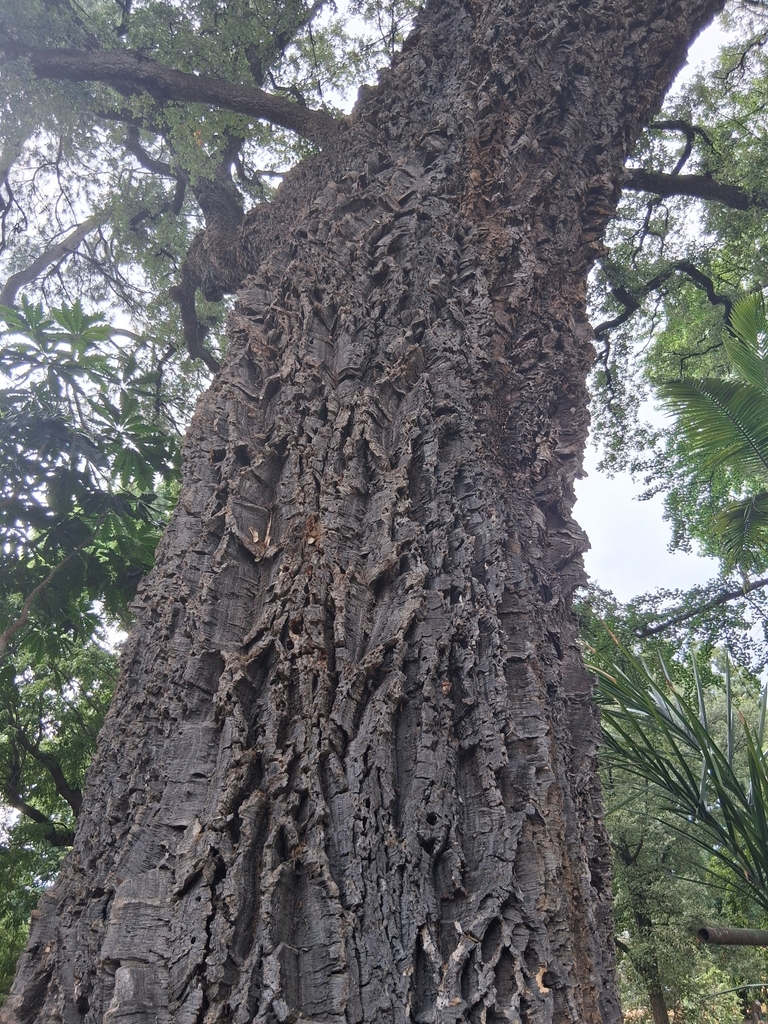
Photo: Peter Andersen, iNaturalist (CC BY 4.0)
Every commercial cork oak in Portugal and Spain gets stripped bare every nine years or so, its bark peeled for wine corks and flooring while the tree survives underneath, scarred orange until it he...
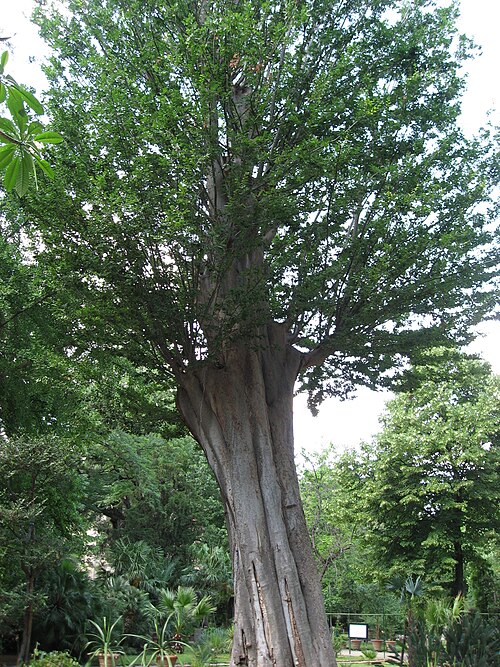
Photo: Line1 (CC BY-SA 3.0)
In the 1980s this tree lost roughly two thirds of its height in a single operation, and it is still on the national register.
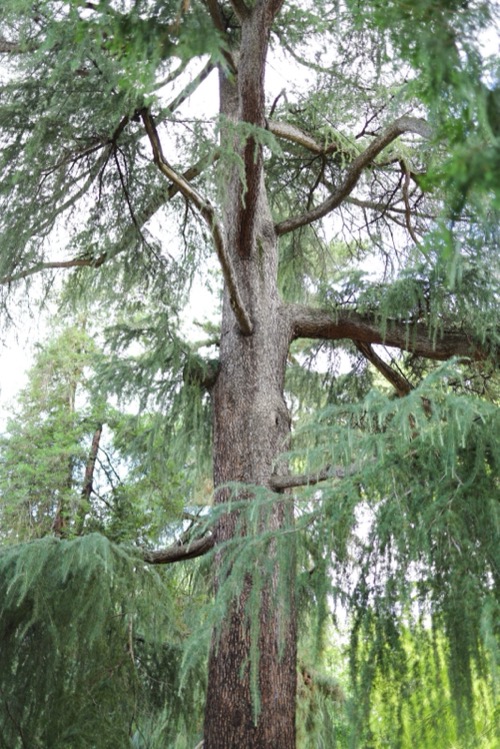
Photo: Sistema Museale di Ateneo, Universita degli Studi di Firenze
The Himalayan cedar only reached Europe in 1822, and this one was on the garden's books by 1880, which makes it an early adopter of a tree that half the continent would go on to plant in every park...
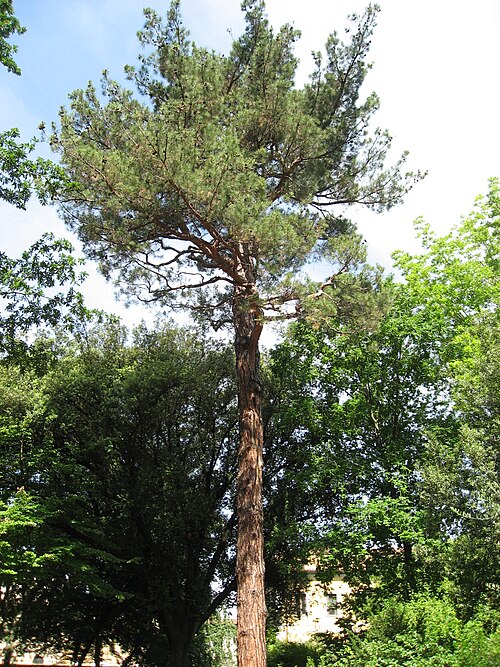
Photo: Line1 (CC BY-SA 3.0)
The garden keeps this pine under constant watch, and says so in print, because its crown has grown into a flag.
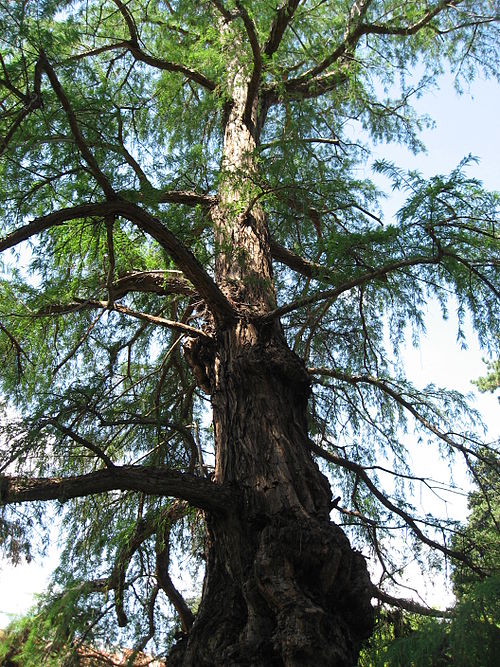
Photo: Line1 (CC BY-SA 3.0)
Nothing else in Florence comes from Mexico, has a trunk seven metres around, and survived being struck by lightning barely a decade ago.
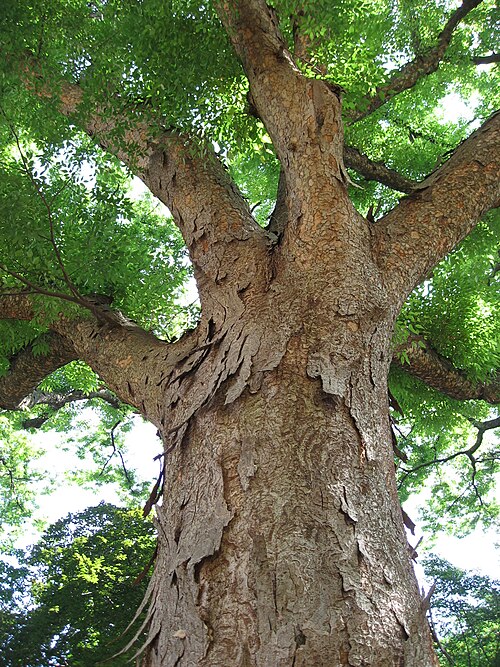
Photo: Line1 (CC BY-SA 3.0)
Somebody has put a tape around this trunk three times in forty years: 3.30 metres in 1980, 3.89 in 2001, 4.40 in 2021.
Opening times and visitor information: the Museo di Storia Naturale.
More parks worth the walk: every park we map. Or explore by city: Brussels · Pamplona · Lisbon · Barcelona · Oahu · Amsterdam