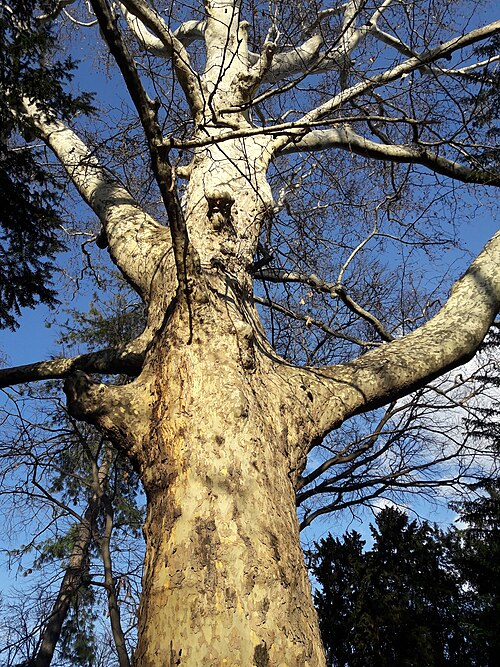
Photo: Ugodiamante (CC BY-SA 4.0)
The largest plane tree in Milan does not grow tall so much as it grows sideways, in every direction at once.
Milan's first public park, laid out in 1784, and the trees in it have been measured more carefully than almost anywhere else in the city.
Six of them are on the monumental register. The largest plane in Milan grows here, spreading sideways rather than up; a bald cypress that gardeners called a metasequoia for years until somebody checked the genus properly; and the widest of Milan's three Caucasian wingnuts, five and a half metres round. One plane has become a research subject in its own right, with the city counting what lives on it.
All 7 stand in Milan, which maps 30 remarkable trees in total.
Photo: Ugodiamante (CC BY-SA 4.0)
The largest plane tree in Milan does not grow tall so much as it grows sideways, in every direction at once.
Milan's monumental-tree register calls this one simply the platano grande, the big plane, and at 6.25 metres round it is among the widest trunks the city has measured in any park.
Depending on which document you trust, this is either one of the two tallest trees in Milan or simply one of the taller ones.
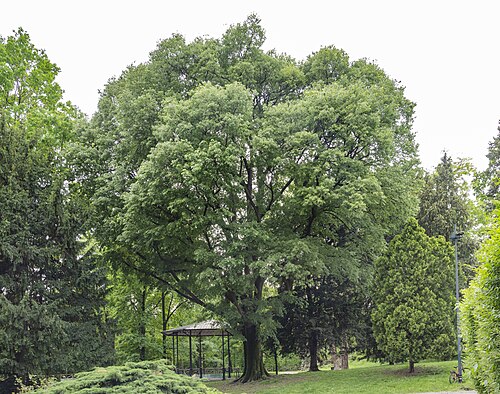
Photo: Sordelli (CC BY-SA 4.0)
Milan calls this species spaccasassi, the stone-splitter, for roots strong enough to crack paving, and this hackberry has had over a century and a half to test the claim against the paths of the ci...
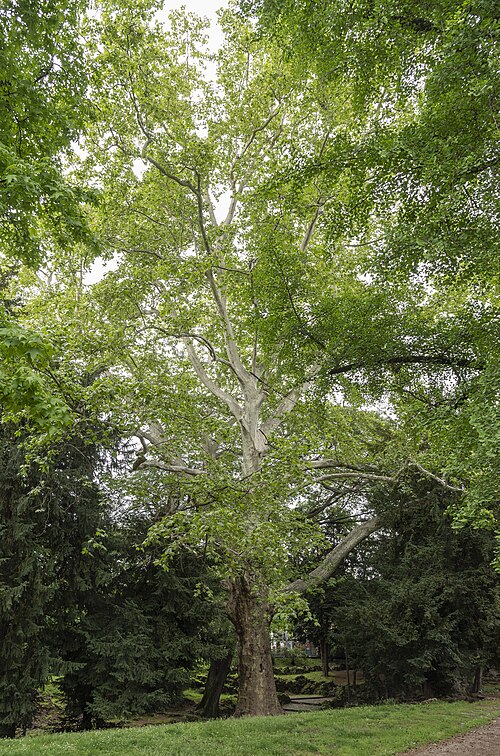
Photo: Sordelli (CC BY-SA 3.0)
Milan picked one plane tree in this park and started counting what lives on it.
For years, gardeners in Porta Venezia's park called this tree a metasequoia and had the genus wrong before anyone checked properly.
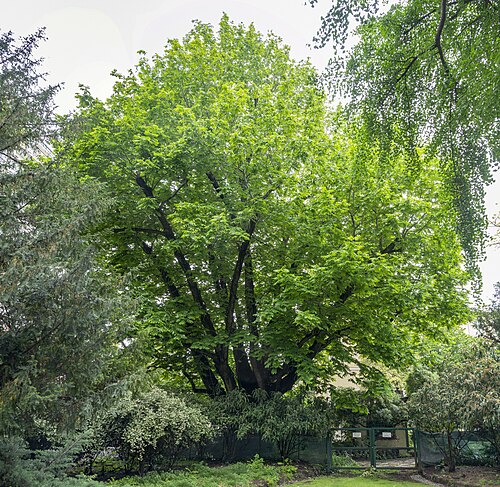
Photo: Sordelli (CC BY-SA 4.0)
Milan has three Caucasian wingnuts worth crossing town for, and this is the widest of them: 5.5 metres around, against 4.7 in the Brera botanical garden and 4.35 for the better-known specimen leani...
Opening times and visitor information: the City of Milan.
More parks worth the walk: every park we map. Or explore by city: Brussels · Pamplona · Lisbon · Barcelona · Oahu · Amsterdam