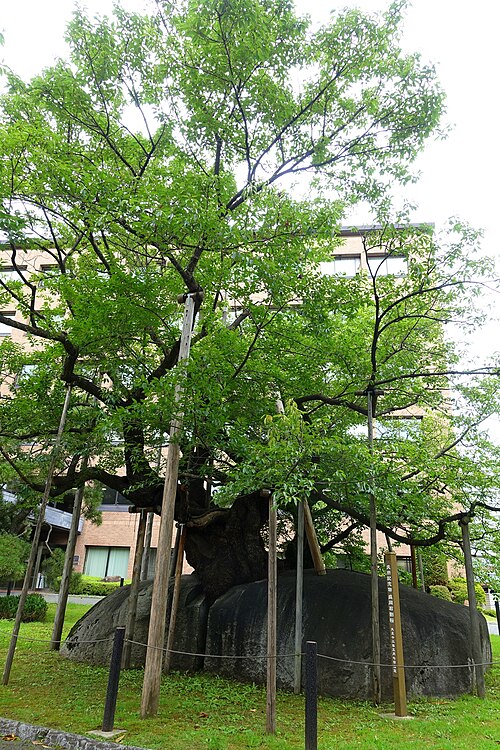
Shidare Katsura of Ryugen-ji
Ohgayu, Morioka
The tree standing here exists because the one before it was cut up for the roof. By 1824 the old weeping katsura at Ryugen-ji had passed thirty metres, and the temple felled it for timber to repair the main hall. A sucker came up off the stump. That sucker is what you walk to now, about twenty-one metres tall and 3.5 metres round at chest height, and the two centuries it has been growing are the shortest part of its story. The rest runs backwards. A weeping katsura, a rare variant of an otherwise ordinary species, was found growing wild in the mountains of Uchikawame roughly four hundred years ago. It was moved first to Myosen-ji, then moved again to Ryugen-ji by the priest who founded the temple in 1574. In 1924 Japan designated it a national Natural Monument together with two clonal sisters elsewhere in Morioka, all three counted as one monument under one name. One thing to know about the numbers. The height and girth above come from a Morioka board of education sign put up in 1994, and every later source quotes that sign. It is one measurement repeated, not two that agree. A photograph from May 2018 shows the tree alive and in full leaf. It grows behind the main hall at the edge of the graveyard, on the grounds of a working Soto Zen temple. No gate, no fee, and no station: Ohgayu is rural, and you arrive by car.
From people who stood here
No notes yet
Did you visit the tree? Leave a note for the next visitor.
Getting there
Ryugen-ji temple, Ohgayu, Morioka City, Iwate Prefecture
You can recognise it by the weeping habit, branches hanging where an ordinary katsura's would spread, about twenty-one metres tall and 3.5 metres round. It stands behind the temple's main hall, at the edge of the graveyard.
Free, on temple grounds (behind the main hall, at the edge of the graveyard); Ryugen-ji is an ordinary working Soto Zen temple, grounds open, no gate or booking involved
No station nearby; Ohgayu is a rural district outside central Morioka, reachable by car
Autumn colour
The line is our estimate of how much there is to see, not a measurement. Typical for this species where this tree stands; exact weeks shift with the year.
Sources
Where the facts on this page come from. The story was written with AI from these sources, and readers who know the tree correct it.