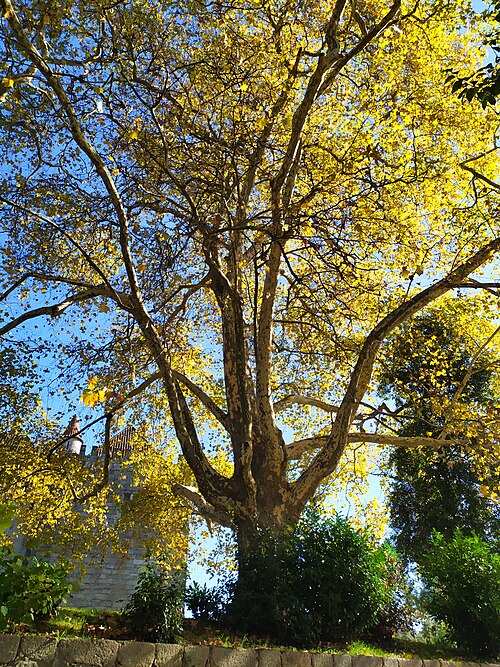
The Olive Tree of Nossa Senhora da Oliveira
Centro Historico
You need a ticket to see this treePaid, 1 euro cloister add-on to the Museu de Alberto Sampaio ticket, Tuesday to Sunday 10:00-18:00
This tree gave the city its second name. According to the legend still told here, a merchant named Pero Esteves brought a crucifix back from Normandy in 1342 and set it beside an olive tree that stood dead in the square, its trunk long dried out. Three days later, so the story goes, the olive turned green again. Guimaraes called the miracle Our Lady's, and the collegiate church behind the square has been Nossa Senhora da Oliveira, Our Lady of the Olive Tree, ever since, with an olive branch worked into the city's own coat of arms. An older layer of the same legend pushes the planting back further still, to the Visigothic king Wamba and a cutting supposedly carried from the Garden of Olives in Jerusalem. What can be said honestly is narrower: the tree growing today in the church's Romanesque cloister, two metres ninety around the trunk, is not documented as that specific plant, and Portugal's tree register, which measured it last in 2021, recorded no age at all. Whatever its years, it stands exactly where the story says it should, in the cloister that once belonged to a monastery founded by Countess Mumadona Dias in 949, on the square that gave the church, and so this whole quarter of the city, its name.
From people who stood here
No notes yet
Did you visit the tree? Leave a note for the next visitor.
Getting there
Claustro do Museu de Alberto Sampaio, Rua Alfredo Guimaraes, 4800-407 Guimaraes
You can recognise it by growing inside the Romanesque cloister of the Museu de Alberto Sampaio, on the square that gave the church its name. It stands where legend says a dead olive turned green again in 1342.
In the historic centre, on foot
In fruit
September to November: the harvest, when the fruit turns from green to black
The line is our estimate of how much there is to see, not a measurement. Typical for this species where this tree stands; exact weeks shift with the year.
Sources
Where the facts on this page come from. The story was written with AI from these sources, and readers who know the tree correct it.
- In the official register: Arvoredo de Interesse Público (ICNF), no. AIP030884104I
- si.icnf.pt
- museualbertosampaio.gov.pt
- pt.wikipedia.org
- ICNF, Arvoredo de Interesse Publico (Portugal's national register of trees of public interest), no. AIP030884104I