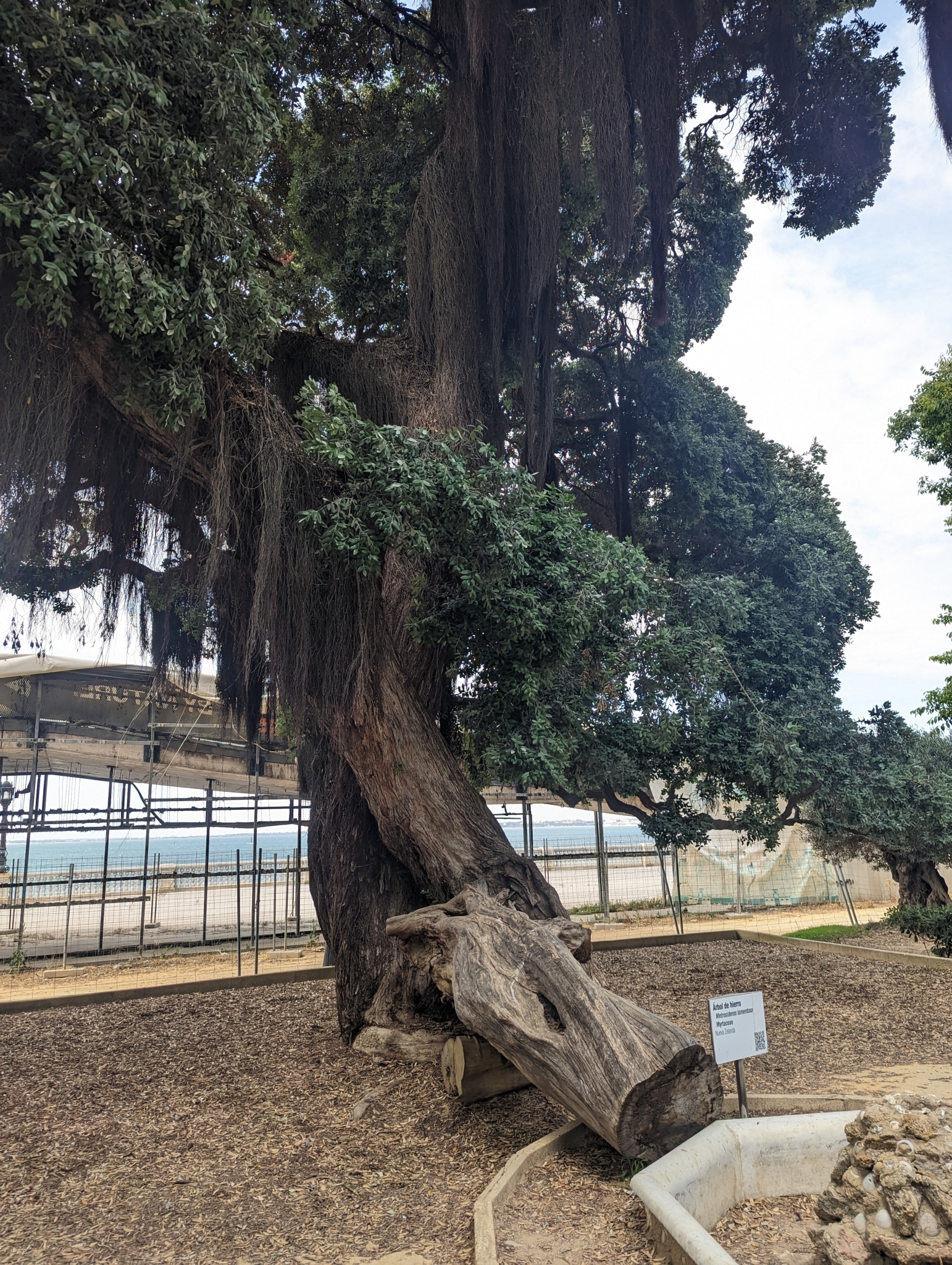
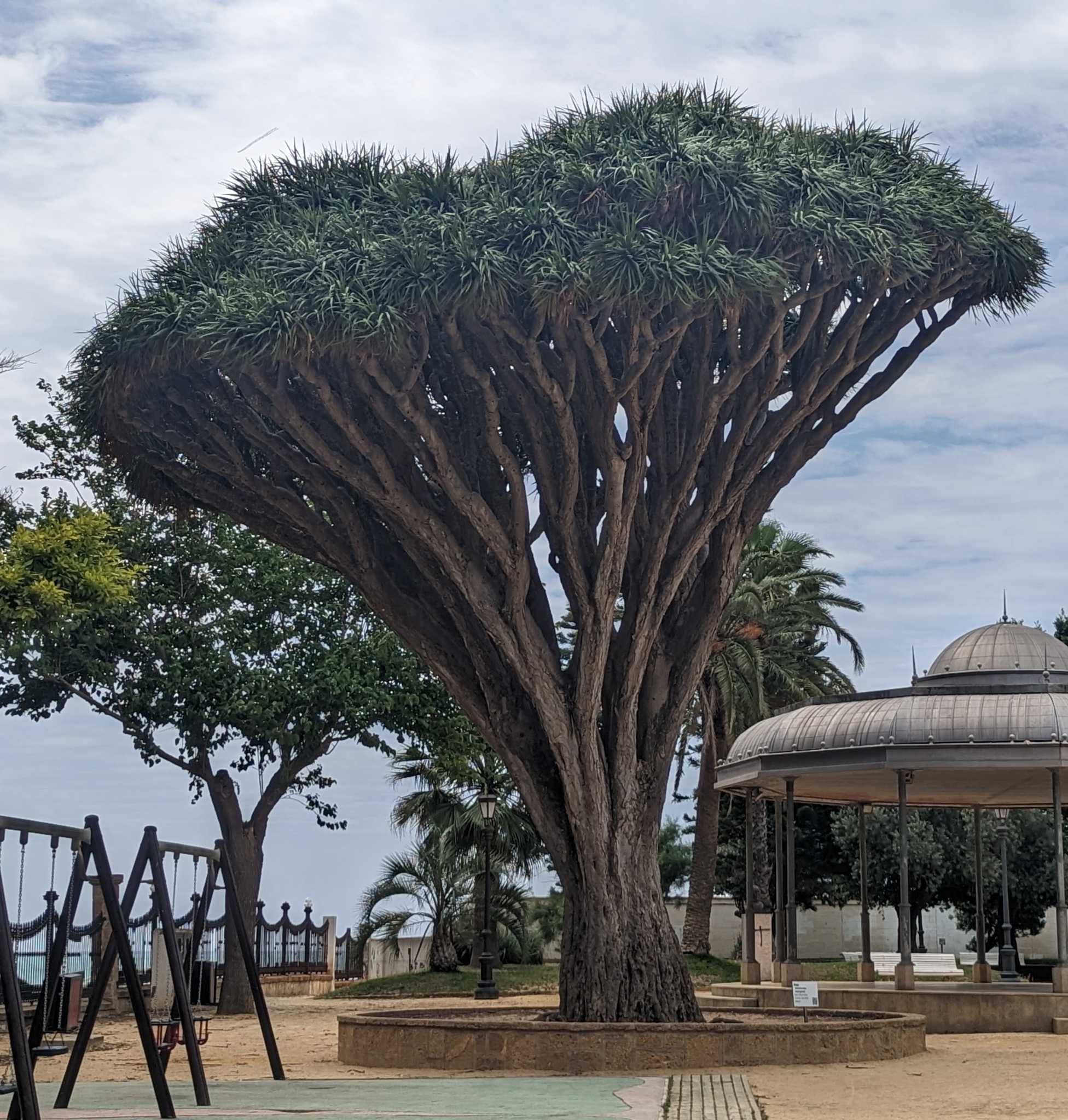
Four fig saplings carried from India by missionary nuns are the origin story behind this tree and its three siblings scattered across Cadiz. One of the nuns died during the voyage and was nursed in her final days at the city's Hospital de Mora; the surviving sisters planted the saplings as a memorial, two here on the seafront Alameda and two more near the old hospital site. Planted in 1903, more than two decades before Juan Talavera y Heredia's regionalist redesign gave the Alameda its current look, the tree has since grown into something closer to a small grove than a single trunk, its lower branches sending down aerial roots that thicken into extra trunks over the flat marble terrace where it stands. Locals sometimes call the pair the Ficus Gemelos, the twin figs, though decades of divergent growth have left one visibly larger than the other. Cadiz's Atlantic wind is hard on a tree built this wide and this exposed, and its wood is known locally as brittle, prone to losing a branch when a storm comes through the bay. None has come down yet. The promenade it shades looks straight across the bay toward the mainland, a public garden with no entry fee and no fence around the roots.
From people who stood here
No notes yet
Did you visit the tree? Leave a note for the next visitor.
Getting there
Alameda Apodaca, 11004 Cadiz
You can recognise it by its aerial roots thickening into extra trunks over the marble terrace, larger than its twin fig nearby. It stands on the Alameda Apodaca seafront.
10 min walk from Cadiz train station
Sources
Where the facts on this page come from. The story was written with AI from these sources, and readers who know the tree correct it.