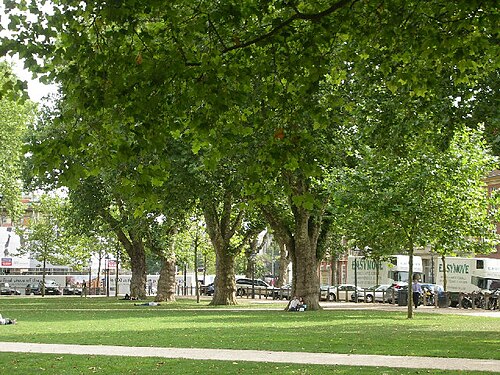
The largest black mulberry in Bristol is 2.3 metres round, and it grows in a university garden that anyone can walk into. The Bristol Tree Forum, which listed the city's biggest trees species by species, gives it the title. The University of Bristol keeps Royal Fort Gardens open to the public every day of the year, with no ticket. Mulberries are not known for standing up straight. The Forum notes they are often found growing horizontally, and this one leans. A mulberry register from 2007 put a tree near the east exit by the engineering building, overhanging a path, which is a rough guide to where to look rather than a promise. What nobody has written down is its age. There is no planting record and no estimate, nothing that dates the trunk at all. If you know when it went in, or have an old photograph of the garden with it in, tell us. What is on record is that it lives. Visitors logged it on iNaturalist in April 2019 and again in July 2025, each time within a few metres of the spot the Forum's survey gives, which is how the map knows where it stands. It sits below Tyndall Avenue and the Wills Memorial Building, a few minutes up Park Street from College Green, so it fits easily into a walk between Queen Square and Clifton. Come in July or August, when the dark fruit ripens and stains the ground beneath.
From people who stood here
No notes yet
Did you visit the tree? Leave a note for the next visitor.
Getting there
Royal Fort Gardens, Tyndall Avenue, Bristol BS8 1UH
You can recognise it by the lean: a black mulberry 2.3 metres round, growing sideways rather than upright. It stands in Royal Fort Gardens, towards the east exit by the engineering building.
Free. The University of Bristol opens Royal Fort Gardens to the public daily all year, with no ticket (its other gardens are by invitation or tour).
Below Tyndall Avenue and the Wills Memorial Building, about 0.9 km (12 min walk) north-west of Queen Square, a few minutes up Park Street from College Green.
In fruit
July and August, when the dark fruit ripens and stains the ground beneath
The line is our estimate of how much there is to see, not a measurement. Typical for this species where this tree stands; exact weeks shift with the year.
Sources
Where the facts on this page come from. The story was written with AI from these sources, and readers who know the tree correct it.