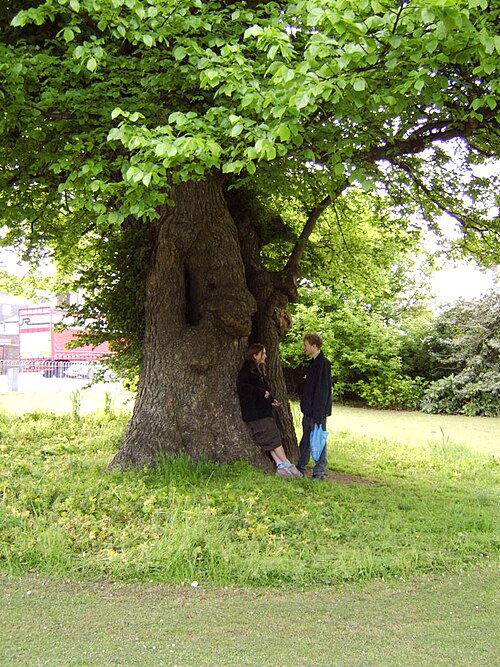
The Stanmer House Cedar of Lebanon
Stanmer Park
Approximate location.
Three cedars of Lebanon stand behind Stanmer House, and one of them is the tallest of its species in East Sussex on the council's own reckoning. They were planted in the eighteenth century, and the tradition here attaches them to Thomas Pelham, who built the house in the 1720s. Cedrus libani was a status planting in English parkland: brought from the mountains of the Levant and set out in front of new country houses precisely because it did not look English. Flat-topped, dark, built in horizontal plates rather than a rounded crown. Three centuries on that is still what marks this group out from the parkland trees around them. There used to be more. One of the original cedars came down in a storm at over 150 years old, and its timber was carved into badger sculptures that are still on the site, which is a better end than firewood. Which of the three carries the height record is not something the sources settle. They describe the cedars as a group, and no girth or height figure has ever been published for any of them, only the designation. So the honest version is this: the tallest cedar in the county is one of these three, and if you know which, tell us.
From people who stood here
No notes yet
Did you visit the tree? Leave a note for the next visitor.
Getting there
Grounds behind Stanmer House, Stanmer Park, Brighton
Three dark, flat-topped cedars standing together on the grass behind Stanmer House, their branches in horizontal layers.
Free, public parkland grounds around Stanmer House, open during park hours
In fruit
September to November: upright barrel cones that sit on the branches like eggs
The line is our estimate of how much there is to see, not a measurement. Typical for this species where this tree stands; exact weeks shift with the year.
Sources
Where the facts on this page come from. The story was written with AI from these sources, and readers who know the tree correct it.