Juliana's Trumpet Tree
NetherlandsBaarnSoestdijk
Approximate location.
You need a ticket to see this treePaid entry to the palace garden, EUR 2.50. Open Friday to Sunday, 11:00 to 19:00 (shorter hours from October).
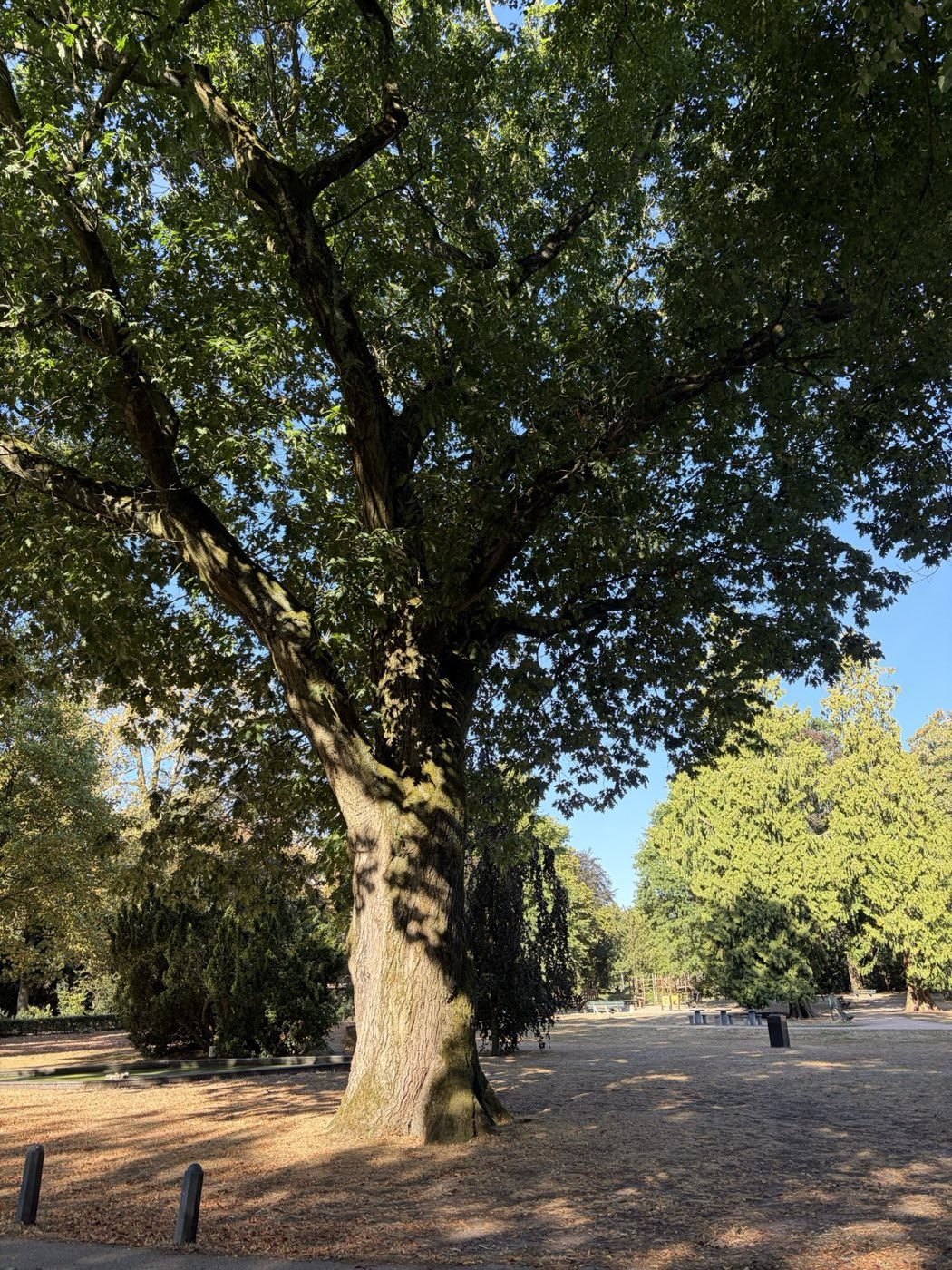
In April 1973 a storm knocked this catalpa flat in the grounds of Paleis Soestdijk, and Queen Juliana told her gardener to leave it exactly where it fell. The roots held. Rather than dying, the tree kept growing sideways, and new vertical trunks rose up along its horizontal length, the way a fallen willow sometimes resprouts. Guides at the palace gardens still point visitors to what they simply call the fallen trumpet tree, a catalpa planted around 1870 that turned storm damage into its main attraction. Trumpet trees rarely age gracefully in the Dutch climate. Their root systems tend to stay shallow, and mature specimens often topple in exactly this way. Most get cleared afterwards. This one got a royal reprieve instead, and half a century on it still flowers white in July from a trunk that runs along the ground rather than up from it. The palace garden charges a small entry fee and opens Friday to Sunday. Past the flower garden Juliana kept for herself is this: a tree that fell over and simply refused to stop growing.
In bloom
July, when it flowers white along its fallen trunk
The line is our estimate of how much there is to see, not a measurement. Typical for this species where this tree stands; exact weeks shift with the year.
Paleistuin, Paleis Soestdijk, Amsterdamsestraatweg 1, BaarnThe tree lying along the ground with several trunks growing upward from its length, not standing upright like the rest of the garden's trees.
About 1.9 km / 20-25 minute walk from Baarn railway station.
Sources
Where the facts on this page come from.
- In the official register: Landelijk Register Monumentale Bomen (Bomenstichting), no. 1691787
- bomenbieb.nl
- vandijktuinen.nl
- services-eu1.arcgis.com