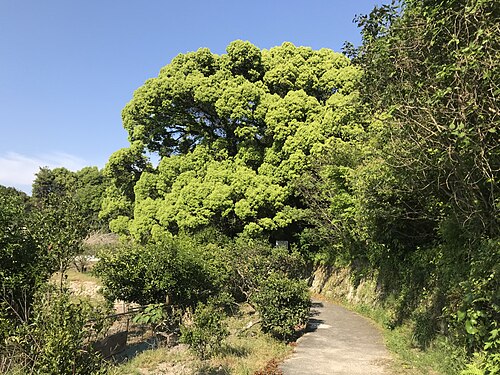
A third camphor stands in the same shrine grounds, and it is the one visitors meet first. Ochi-no-Mikoto's Hand-Planted Camphor stands directly facing the sando, the approach path into Oyamazumi Shrine, with a trunk eleven metres round at breast height and a crown reaching fifteen metres over the path. Temple tradition names Ochi-no-mikoto, a legendary ancestor of the later Ochi clan, as the one who planted it, sometime before the reign of Emperor Jinmu. That is a founding legend, not a documented planting date, and the site treats it that way. The age given, roughly 2,600 years, comes with the story attached rather than a growth-ring count. What is measured is the girth. Japan's Ministry of Environment giant-tree survey for the Chugoku-Shikoku region puts it at eleven metres, among the thickest camphors recorded anywhere in the country. Together with Ikiki no Gomon and 35 further camphors across the grounds, it belongs to the Oyamazumi-jinja Camphor Grove, designated a National Natural Monument in 1951 as Japan's oldest primeval camphor stand. Free to see, open daily, and the easiest of the shrine's three trees to find, it stands on the path everyone already walks, facing the gate.
From people who stood here
No notes yet
Did you visit the tree? Leave a note for the next visitor.
Getting there
Approach path (sando) of Oyamazumi Shrine, Miyaura, Omishima, Imabari, Ehime Prefecture, Japan
You can recognise it by its 11-metre trunk standing directly facing the shrine's approach path, its crown spreading 15 metres over it. It stands on the sando at Oyamazumi Shrine.
Free, within Oyamazumi Shrine grounds, open daily (same access as omi_001/omi_002).
Same as omi_001/omi_002: Omishima Island (Shimanami Kaido); by car or bus from Imabari Station.
Sources
Where the facts on this page come from. The story was written with AI from these sources, and readers who know the tree correct it.