Seasons1 of 4
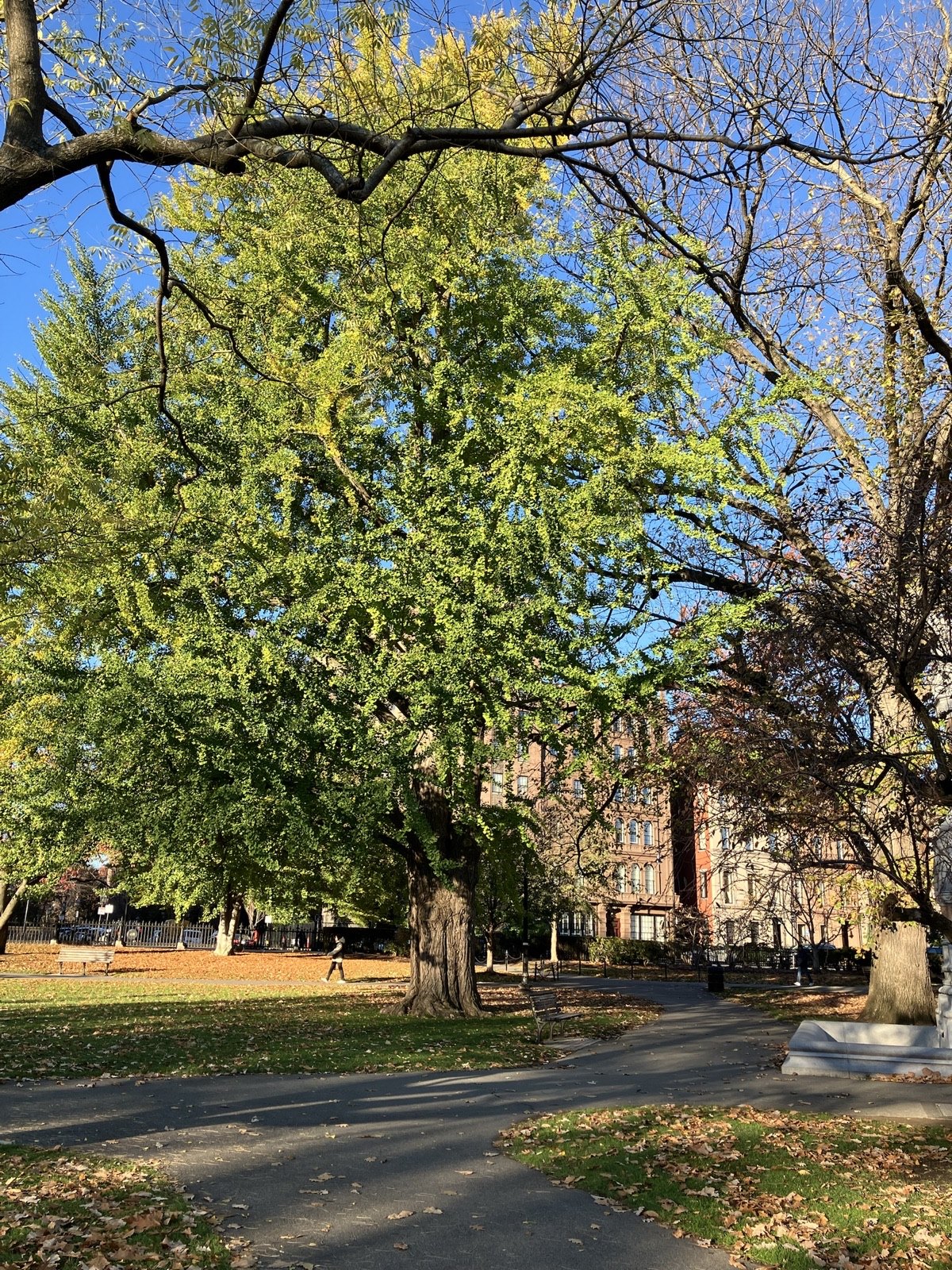
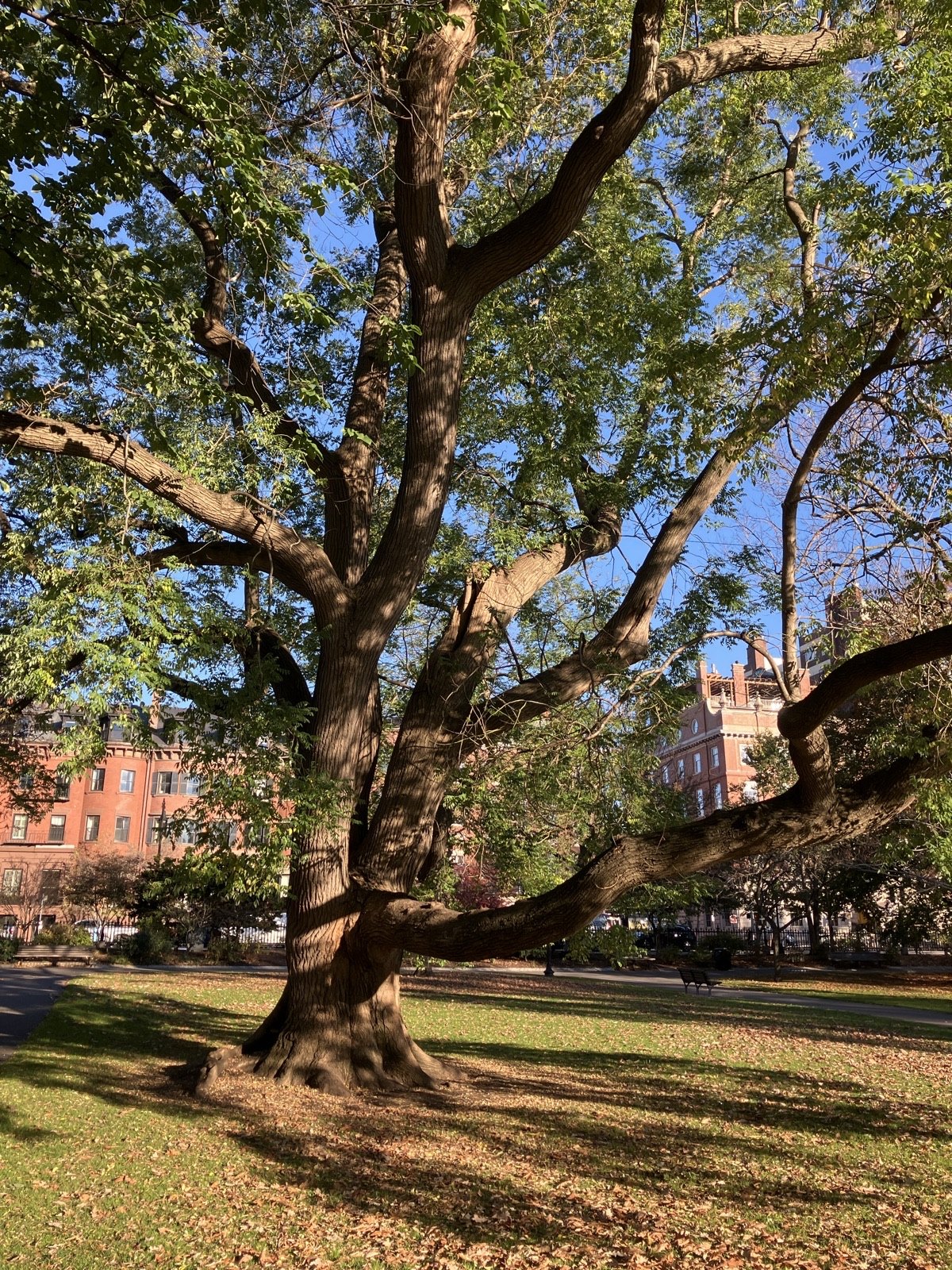
Macrocarpa means big fruit, and this oak's acorns sit in cups edged with a shaggy fringe. It is the broadest of the Public Garden's six bur oaks, 53.1 inches across in the city's tree inventory, about 4.2 metres round. The next one down is 41.4. That inventory is the only record of this tree's size. No register lists it and nothing published gives its history, so the figure stands on one good source. It is still a big oak by any standard for a city garden, and it has a lot of company. The Garden's biggest ginkgo stands about ten metres away and the state's second-largest Japanese pagoda tree a little further on, so this corner of the Arlington Street side packs three of the Garden's largest trees into a space you can cross in a minute. Bur oak is a North American species, and its big, deeply lobed leaves are almost as distinctive as the acorns, which come down under the crown in autumn. Nobody has published when this tree was planted, and its girth alone is not an honest guide to the age of an oak in a city garden. If you know its story, tell us. It is a three-minute walk from Arlington station.
From people who stood here
No notes yet
Did you visit the tree? Leave a note for the next visitor.
Getting there
Public Garden, west side, Boston
You can recognise it by the big deeply lobed leaves and acorns in fringed cups, the broadest of the Garden's six bur oaks. It stands on the west side, about 10 metres from the big ginkgo.
Public park, free, open daily (Boston Parks hours apply).
The line is our estimate of how much there is to see, not a measurement. Typical for this species where this tree stands; exact weeks shift with the year.
Sources
Where the facts on this page come from. The story was written with AI from these sources, and readers who know the tree correct it.